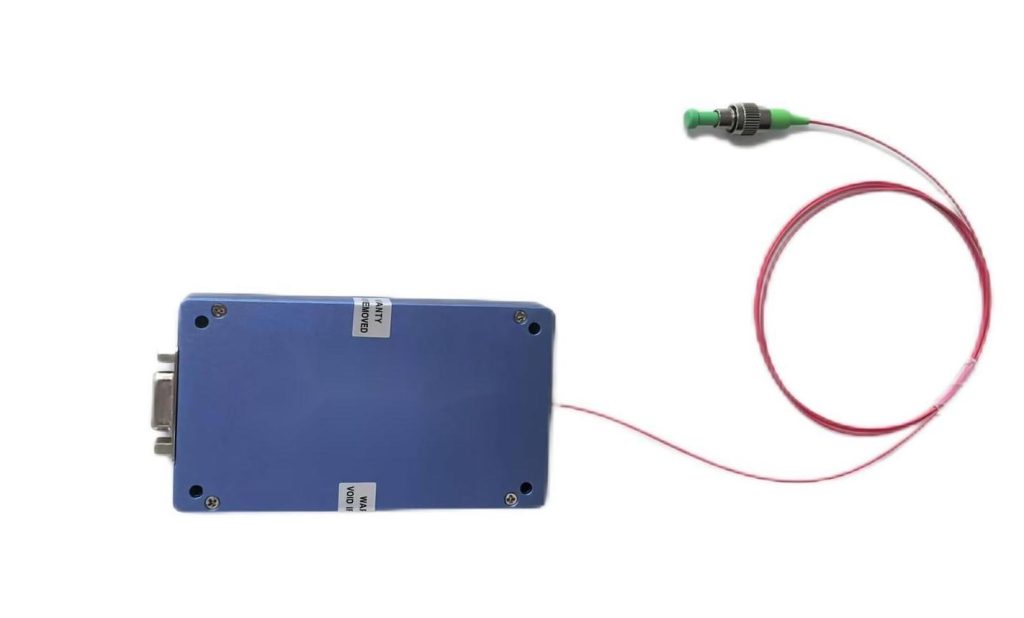
Best Narrow Linewidth Laser for Fiber Optic Sensing Systems
Fiber optic sensing techniques like Distributed Acoustic Sensing (DAS), Φ-OTDR, and interferometric sensors depend primarily on the laser source’s performance. Out of all the qualities of the laser, one that takes the most influence is linewidth, as it is the main factor that determines the range of sensing, the quality of the signal compared to the noise, and the stability of the phase.
Nonetheless, the “best” laser for fiber optic sensing systems with the narrowest linewidth is not just the one with the least specified linewidth. It is the source that most closely corresponds to the particular sensing arrangement, noise acceptance, and requirements at the system level.
This article describes the procedures to be followed in order to determine which narrow linewidth laser is the most appropriate for fiber optic sensing from an engineering point of view.
Why Fiber Optic Sensing Systems Require Narrow Linewidth Lasers
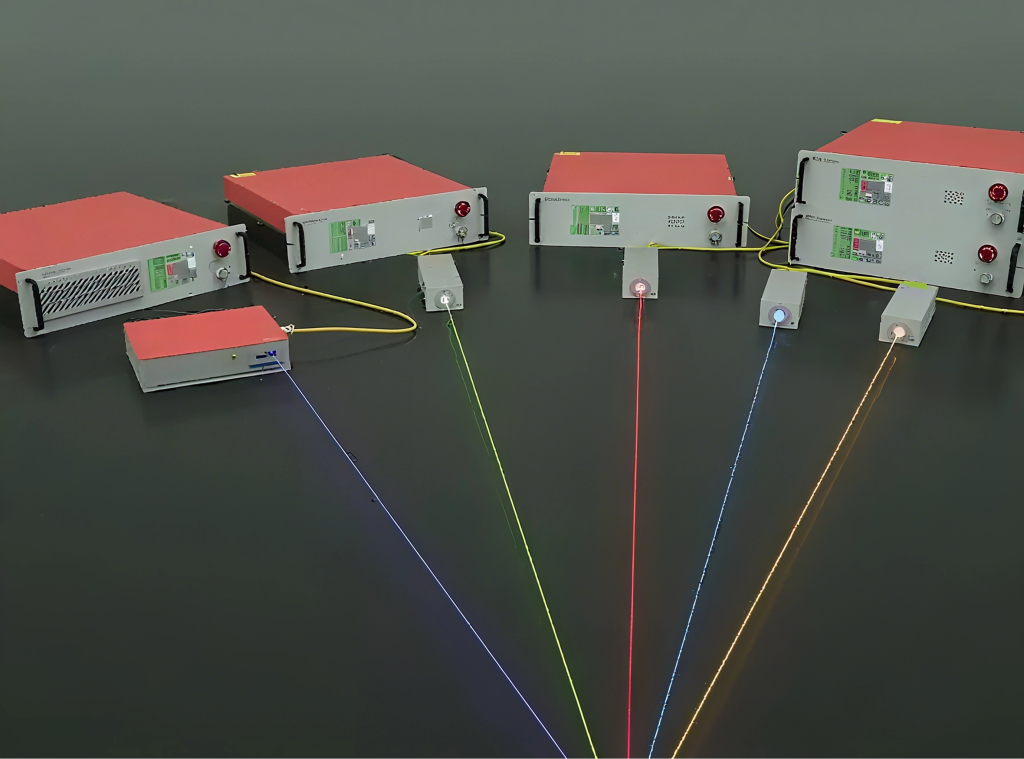
The majority of fiber optic sensing mechanisms are reliant on coherent detection. The system might be interpreting Rayleigh backscattering, measuring phase differences, or analyzing interference patterns, yet still, the laser’s coherence will be the direct factor influencing the system’s performance.
The laser’s linewidth establishes the coherence length, and it should be substantially longer than the fiber’s effective sensing length. If the linewidth is too wide, phase noise gets amplified, and as a result, the interference visibility goes down, and the signal stability suffers.
In Φ-OTDR and DAS systems, the random phase fluctuations resulting from excessive linewidth jeopardize the detection of weak acoustic or vibration signals. In interferometric sensing, control over introduced phase errors becomes the direct limiting factor for resolution and accuracy.
That is why it is common practice to use narrow-linewidth lasers in fiber optic sensing applications rather than standard telecom-grade ones, as the latter just do not provide the necessary reliability.
Linewidth Requirements for Different Fiber Optic Sensing Technologies
Various fiber optic sensing technologies demand different laser linewidths that vary significantly from one to another. The choice of optimal linewidth relies on factors like sensing distance, detection method, and phase noise tolerance rather than on a single universal specification. A good grasp of these disparities will keep one from both under-specifying and over-specifying laser sources.
The most common linewidth needs can be grouped as follows:
- Φ-OTDR and DAS systems: For short to medium sensing distances, linewidths of a few kHz are generally enough. For long-range measurements or high spatial resolutions, the use of linewidths smaller than 1 kHz is a way to reduce phase noise accumulation and make signal quality more consistent.
- Interferometric fiber sensors: Mach-Zehnder and Michelson types are very sensitive to phase changes. In such cases, it becomes necessary to use lasers with even narrower linewidths, especially when the difference in lengths of the two paths is quite large.
- Short-range or point sensors: The first kind of systems, however, can afford to use lasers with comparatively wider linewidths because the coherence length requirements are less strict and the impact of phase noise is diminished, thus reducing the noise floor requirements.
However, in real life, it is very rare to select the narrowest linewidth possible. The ideal narrow linewidth laser for fiber optic sensing systems is the one that covers all the above-mentioned requirements of coherence and noise while also keeping the system simple, stable, and affordable.
Key Laser Specifications That Matter in Fiber Optic Sensing Applications
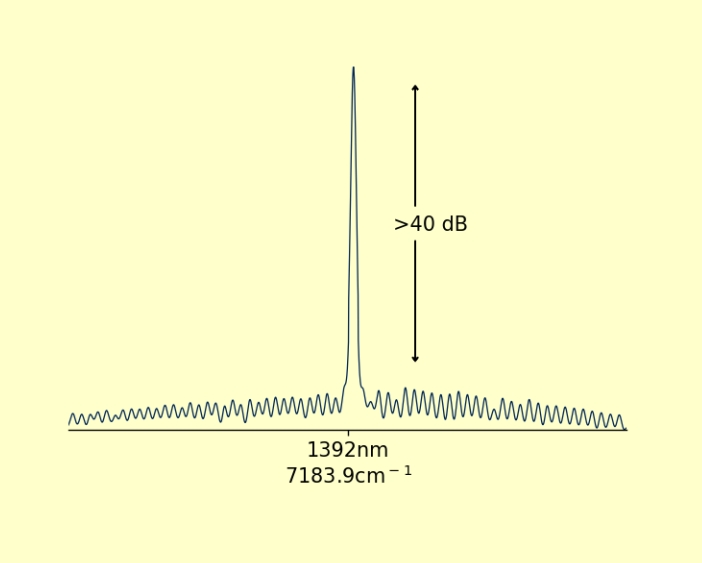
While linewidth is of great importance, it ought not to be assessed in isolation. There are many other laser specifications that have a strong effect on the quality of fiber optic sensing.
- Phase noise and frequency noise usually matter more than the single linewidth number mentioned in a datasheet. Two lasers that have the same linewidth specifications can vary a lot in sensing systems if their low-frequency noises are different.
- Relative intensity noise (RIN) influences the signal-to-noise ratio, which is particularly the case in systems that depend on weak backscattered signals. Low RIN is an important factor for keeping detection sensitivity over long fiber lengths.
- Systems operating over extended periods require stability and a drift of the wavelength to be maintained. The gradual frequency drift can manifest as the occurrence of false signals or as the movement of the baseline in the sensing data.
- It is important to have stability in output power, too. Variations in optical power cause amplitude noise, which leads to the reduction of measurement repeatability.
In fiber optic sensing applications, the most effective laser sources are those with balanced noise performance and stable operating characteristics, rather than lasers optimized for a single headline specification.
DFB, DBR, or External Cavity: Choosing the Right Narrow Linewidth Laser
The laser architecture chosen massively determines the linewidth, noise behavior, and system complexity, as well as the cost in fiber optic sensing systems.
- DFB lasers are always the first choice. The modern low-noise DFB design is capable of kHz-level linewidth and short-term stability, making it fit for many DAS and Φ-OTDR systems. They provide a great deal of balance between performance, size, reliability, and cost, especially for OEM integration and large-scale deployments.
- DBR lasers give a better frequency stability and a better wavelength selectivity than standard DFB lasers. They are often chosen when Tighter frequency control or reduced mode competition is required, while still maintaining a compact semiconductor-based design. For some distributed sensing systems, DBR lasers are the best solution as they provide a practical upgrade without the complexity of an external cavity.
- External cavity lasers (ECLs) stand out by far the most among laser types when it comes to the narrowest linewidth and the least phase noise. They are commonly utilized in super-high precision interferometric measurements or in long-distance systems where phase noise is the major performance limitation. Nevertheless, ECLs are highly priced, large, and more often than not, superfluous for applications that just need a little bit of their ultra-narrow linewidth, i.e., not fully exploit it.
In real operation, the optimum selection is determined by the noise tolerance at the system’s level, not the smallest linewidth among others.
How to Select the Best Narrow Linewidth Laser?
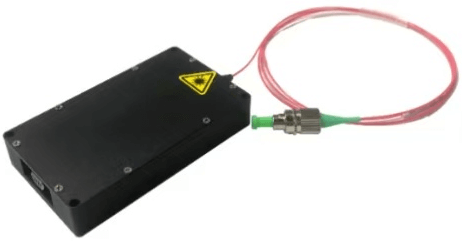
- The very first thing to do when choosing a narrow linewidth laser is to specify the distance and the architecture of the sensor. In the case of DAS or Φ-OTDR systems, which are distributed sensing, the laser coherence length must be longer than the effective fiber length. Practically, this means that the linewidth should be in the low kHz range. If a sub kHz laser is chosen, it does not bring any advantage unless the system is long nomore than very long fibers or needs extremely high spatial resolution.
- Then, judge phase noise instead of linewidth only. Different lasers can have almost identical linewidth specifications but will still show different performances in sensing applications. Low-frequency phase noise is a factor that directly reduces signal stability in fiber sensing systems, and it should be taken into consideration ahead of an aggressively small nominal linewidth.
- The third step consists of verifying the stability of intensity and frequency. If there is too much RIN or if the wavelength drifts, then the signal-to-noise ratio will be lower, and false detection may occur even if the condition of linewidth is fulfilled.
- Lastly, take into account the integration and control of the system. A laser that is capable of producing the required linewidth with the utmost precision in current and temperature control will often outperform a twice as complicated laser, as it is difficult to integrate.
In the case of most fiber optic sensing systems, a narrow linewidth laser of kHz class that has been perfectly designed for the application can be considered a trade-off between performance, reliability, and price.
There is no universal “best” narrow linewidth laser for fiber optic sensing systems, and the choice of type will depend on the sensing technology and system design, as well as noise tolerance. Keeping practical linewidth requirements, phase noise behavior, and overall laser stability in mind, system designers can have a reliable, high-performance fiber optic sensing system without unnecessary complications.
Want to know more or find the best narrow linewidth laser? SMART’s products will definitely not disappoint you. Contact us to learn more!