
Can Your Passive Optical Components Survive Severe Thermal Cycling?
When designing high-performance laser systems or optical sensors, engineers usually focus their budget and time on active components, such as narrow-linewidth lasers or fiber acoustic-optic modulators (fiber AOM).
However, when these systems are deployed from stable laboratory environments to harsh industrial settings (such as outdoor FMCW lidars or factory workshops), a troublesome failure mode often occurs: unexplained power drops and signal attenuation. In fact, the main culprit of this problem is rarely the laser itself; it is almost always passive optical components.
In practical scenarios, thermal instability poses a significant risk to passive links. If your optical coupler, optical isolator, circulator or wavelength division multiplexer (WDM) cannot withstand drastic temperature fluctuations, the entire system will be at risk of failure.
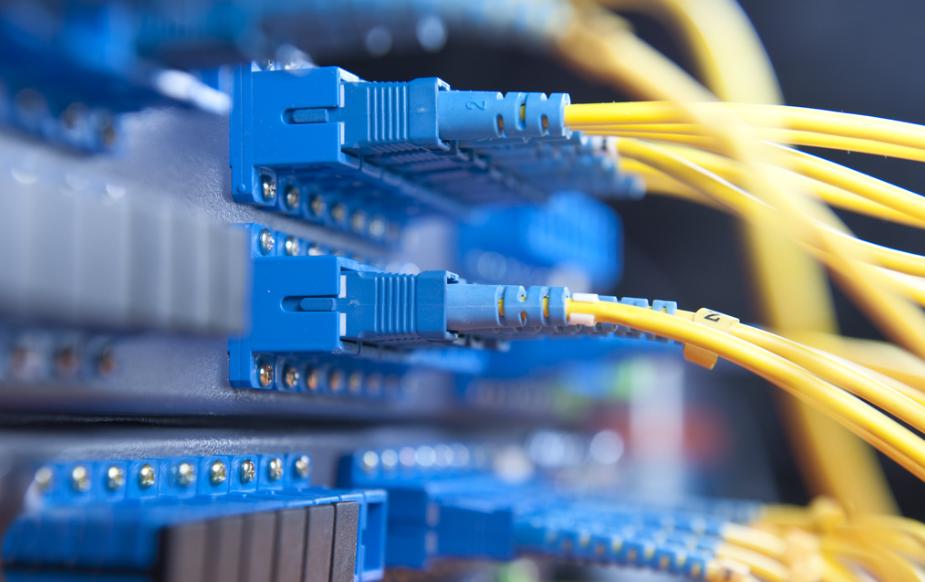
What Happens inside Passive Optical Components During Thermal Cycling?
Industrial passive components are devices that achieve sub-micron alignment. Within the tiny stainless steel casing, optical fibers, lenses, and crystals must maintain precise geometric alignment over a wide temperature range.
When the device undergoes intense thermal cycling (typically a temperature change from -40°C to +85°C), several microscopic failure mechanisms are triggered simultaneously:
Coefficient of Thermal Expansion (CTE) Mismatch
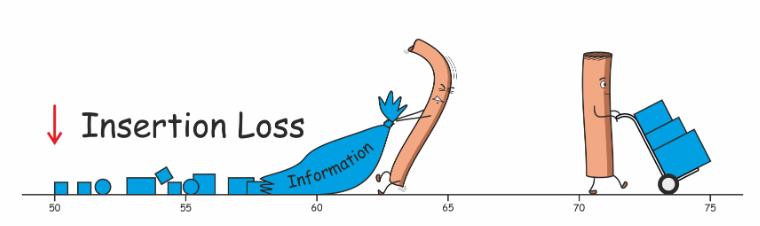
Each material used in micro-optics has its own unique coefficient of thermal expansion. The expansion and contraction rates of the glass for the lens, the metal for the casing, and the optical epoxy resin are completely different. This can result in significant mechanical stress during rapid temperature changes. Even a slight misalignment of the internal alignment can cause the optical path to drift, leading to a sudden increase in insertion loss (IL).
Optical Epoxy Degradation & Aging
Many standard commercial components rely heavily on optical adhesives to fix internal components. Under repeated and intense thermal shock, low-quality adhesives will expand and contract drastically, becoming fragile, cracking or delaminating over time. Once the epoxy resin loses its integrity, moisture in the environment will seep into the optical path, completely burning the components under the action of high-power industrial laser beams.
Stress-Induced Polarization Instability
For polarization-maintaining (PM) passive devices, thermal cycling introduces additional complexity. PM devices rely on internal stress structures to maintain the polarization of light. The external thermal stress caused by the expansion of the housing can disrupt this delicate balance, leading to polarization drift. This affects the polarization extinction ratio (PER), which is very serious for coherent sensing systems such as FMCW laser radars and distributed acoustic sensing (DAS) networks.
What Does a “Severe” Thermal Cycling Profile Look Like?
To ensure that industrial-grade passive optical devices can withstand the challenges of on-site deployment, reliable manufacturers will conduct rigorous environmental stress tests on the devices in accordance with international standards such as Telcordia GR-1221-CORE.
This usually involves testing three key parameters:
- Extreme temperature limit: Place the device in a programmable environmental test chamber and subject it to a cyclic temperature change ranging from -40°C to +85°C. This temperature range covers the absolute limits of outdoor automotive and industrial operating environments.
- Rapid heating rate: The rigorous test employs a steep heating rate (typically exceeding 1°C to 5°C per minute), artificially applying the maximum thermal shock. This process immediately exposes any structural defects or insufficient bonding strength issues.
- Extend the cycle time: The number of cycles for the device is not just a few times. They stay at extreme high and low altitudes for several hours, and the entire cycle repeats for hundreds or even up to 1000 consecutive hours to simulate years of environmental wear and tear.
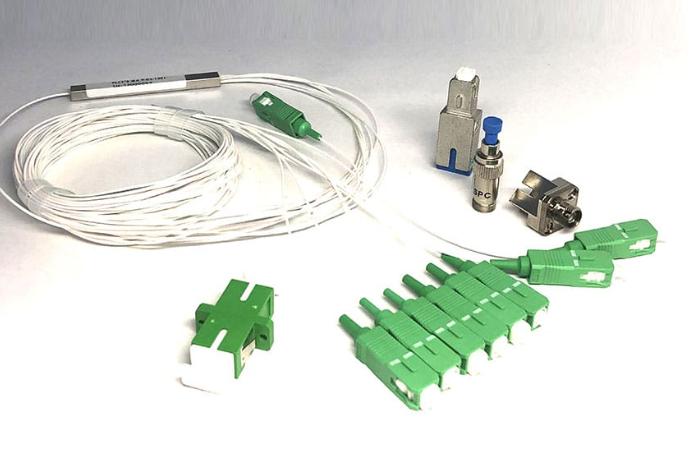
Key Performance Indicators (KPIs) to Monitor After the Test
If you are evaluating passive optical components for high-reliability projects, you should check three key performance indicators after the thermal cycling test to ensure their true stability.
| Key Metric | What It Measures | Target Pass Criteria |
| Insertion Loss (IL) Delta | The change in signal attenuation before and after the thermal test. | Total variance should be minimal (typically less than 0.2dB). |
| Return Loss (RL) Stability | The amount of light reflected back toward the laser source due to internal damage. | Must remain high (typically greater than 50dB or 55dB) to avoid damaging active pump sources or seeding lasers. |
| Polarization Extinction Ratio (PER) | The ability of PM devices to maintain cross-talk isolation between optical axes. | Must remain stable at greater than 20dB or even 23dB across the entire temperature curve, not just at room temperature. |
Why Smart SCI&TECH Never Compromises on Passive Component Reliability
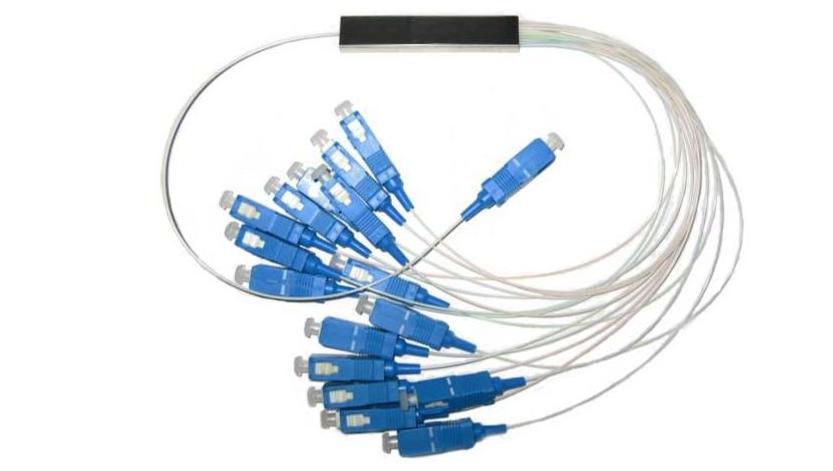
At Smart SCI&TECH, we are well aware that even a displacement of just a few micrometers in a fiber coupler or optical isolator due to temperature fluctuations can cause the entire system to fail. To mitigate the risks brought about by intense thermal cycling, we employ three rigorous manufacturing processes:
- Active stress matching: We employ an atomic-level active alignment system and finite element analysis (FEA) modeling to ensure the symmetrical expansion of the metal housing, gradient refractive index (GRIN) lenses, and crystals, thereby completely eliminating the mismatch in thermal expansion coefficients (CTE).
- NASA-grade optical epoxy resin: We strictly avoid using low-grade commercial adhesives. We uses a dedicated low-volatile optical epoxy resin, which maintains structural elasticity and prevents moisture absorption and delamination even at 85°C.
- 100% environmental screening: Every piece of polarization-maintaining (PM) and high-power device undergoes strict heat treatment before leaving the factory. We monitor the insertion loss (IL) and polarization extinction ratio (PER) data in real time within the environmental test chamber to detect and eliminate defects as early as possible.
By ensuring that our passive optical components can withstand harsh thermal cycles, we have provided a foundation of ultra-low loss for your high-power MOPA fiber lasers and narrow linewidth systems.