Troubleshooting Common Q-Switch Performance Issues: A Practical Guide
In a laser system, the problem of the acousto-optic Q-switch rarely manifests itself in a single obvious failure form. More commonly, the system performance gradually deteriorates, such as pulse energy drift, unstable timing, or unexpected reduction in efficiency, etc.
This guide focuses on the common on-site Q-switch performance issues and how to solve them in a practical way, especially for the acousto-optic Q-switch used in industrial and research lasers.
Pulse Energy is Unstable
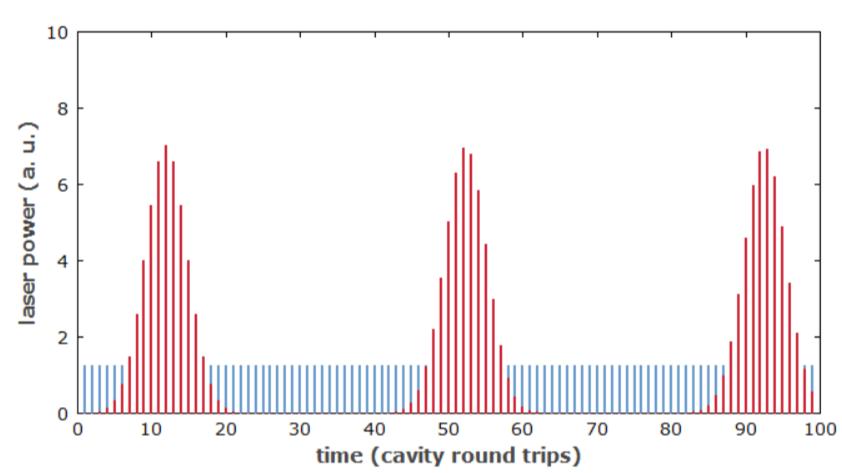
The energy fluctuations between pulses are one of the most frequently reported issues related to Q-switching, especially in high repetition rate systems.
In many cases, the Q-switch itself is not “faulty”, but rather it operates under suboptimal RF conditions. Minor changes in RF power, impedance mismatch, or temperature can directly affect the diffraction efficiency, which in turn manifests as unstable pulse energy.
Additionally, there is another factor that is often overlooked – the stability time of the sound waves. If the trigger time of the radio frequency drive is too close to the laser pumping cycle, the sound waves inside the crystal may not be able to fully establish, which in turn leads to inconsistent Q-switching performance between pulses.
For these issues, a practical inspection method is to continuously monitor the stability of the RF power at the input end of the Q-switch, rather than just at startup. If the RF power drifts with temperature, the resulting optical instability will also occur.
Low or Decreasing Diffraction Efficiency
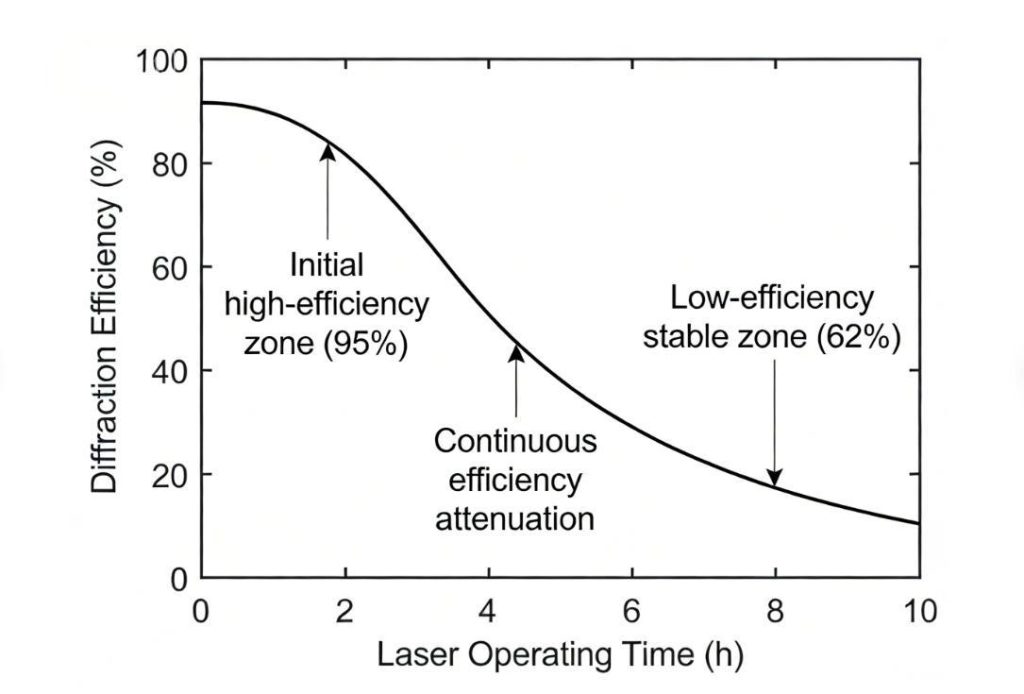
When the diffraction efficiency is lower than expected, or gradually decreases during operation, the cause is usually cumulative rather than sudden.
One of the common causes is optical alignment drift. Even a small angular deviation between the laser beam and the acoustic interaction area can significantly reduce efficiency. This is particularly evident in compact laser heads with strict mechanical tolerances.
Additionally, contaminants on the Q-switch diaphragm can also reduce the effective efficiency. Unlike lenses, even though they operate under high light intensities, the Q-switch diaphragm is sometimes overlooked during maintenance.
If the efficiency decreases after a long period of operation, the thermal effect should be considered. Local heating will slightly alter the sound velocity in the crystal, causing the optimal radio frequency to deviate from the set value of the driver.
Excessive Insertion Loss or Unexpected CW Leakage
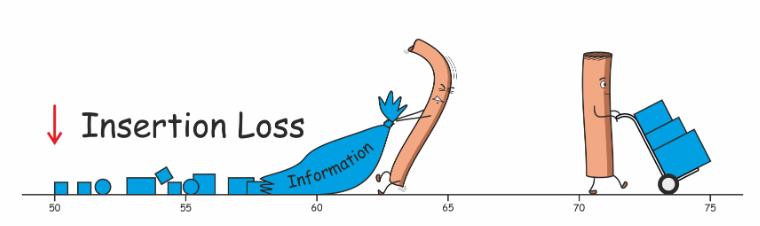
If high power loss occurs when the Q switch is in the “off” state, or if residual laser light is detected when it should be completely blocked, then there is a problem.
Insertion loss is usually caused by contamination or minor damage on the surface of the crystal. Even contamination that is invisible to the naked eye can introduce scattering loss, especially when the power density within the cavity is high.
On the other hand, continuous-wave leakage usually indicates that the Q switch is not providing sufficient loss during the holding phase. This could be due to insufficient RF power, incorrect polarization, or incorrect working wavelength.
Here are some brief references to common causes:
| Symptom | Likely Cause |
| High insertion loss | Contaminated or damaged crystal surfaces |
| CW leakage | Low RF power or polarization mismatch |
| Partial Q-switching | Wrong RF frequency or beam misalignment |
Slow Switching Speed or Long Rise Time
If your pulse appears to be stretched out or the leading edge is slower than expected, then the switching speed might be the limiting factor.
In the optical-acoustic Q-switch, the rise time is affected by the acoustic wave transit time, and the acoustic wave transit time depends on the crystal size and the beam diameter. A larger beam requires a longer time to complete the switching because the acoustic wave must pass through the entire optical mode.
The bandwidth of the radio frequency driver is also very important. Some drivers can provide sufficient power, but their rise time is slow, which directly limits the performance of the Q-switch.
In applications where short pulse width or high repetition frequency is required, this problem becomes even more prominent.
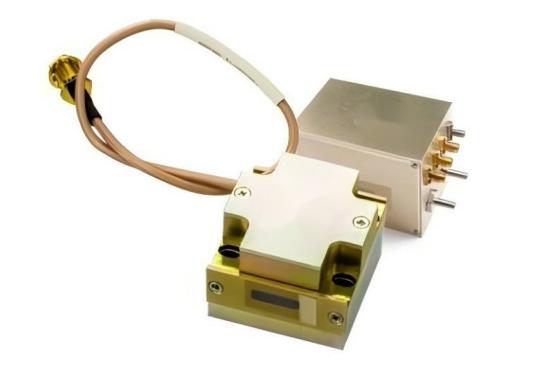
Thermal Issues at High Repetition Rates
At high repetition frequencies, thermal effects are inevitable. Continuous radio frequency drive causes heat to accumulate within the Q-switch crystal, thereby altering the sound velocity and reducing the diffraction efficiency over time – even though the average power may seem acceptable.
Typical thermal symptoms include:
- Pulse energy dropping after warm-up
- Increased sensitivity to RF power adjustments
- Degraded pulse stability during long runs
A common cognitive error is to take the shell temperature as an indicator. The local temperature inside the crystal may be much higher than the surface temperature. If the performance changes over time but returns to normal after cooling, the problem lies in the heat dissipation management rather than the Q-switch itself.
RF driver – Q-Switch Mismatch
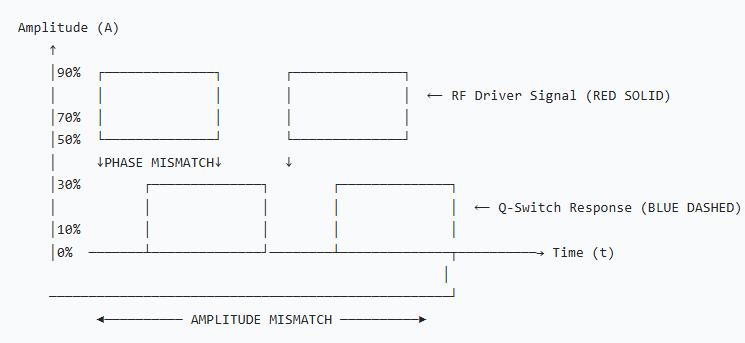
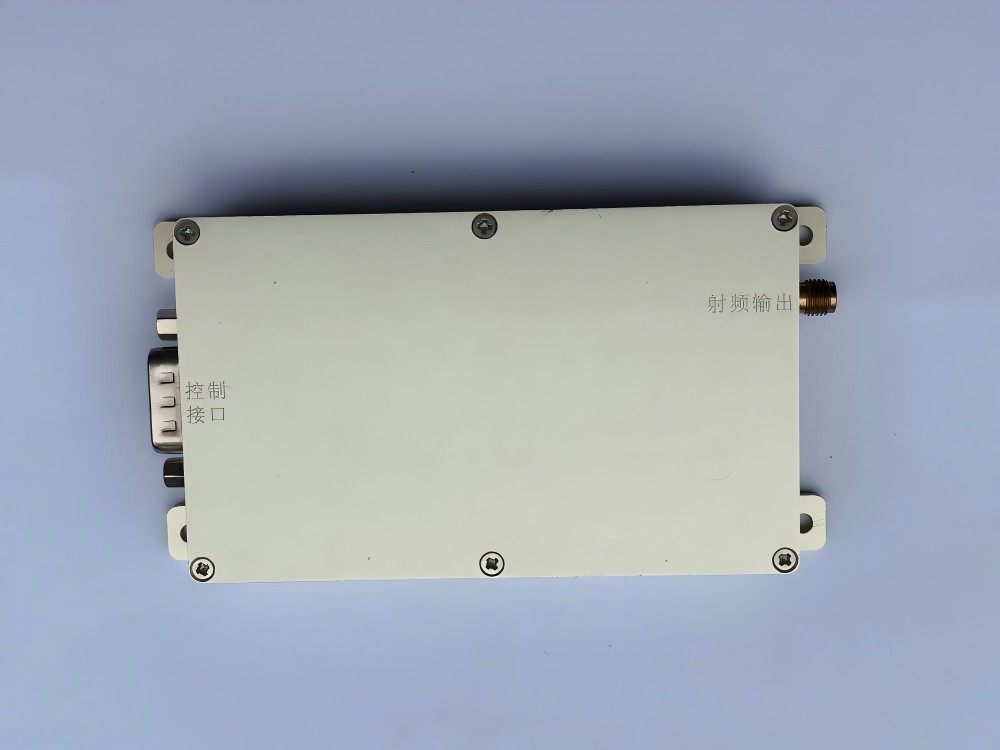
Many issues related to the optical and electrical Q-switches actually stem from the RF driver rather than the crystal itself. If the driver and the Q-switch do not match, a significant portion of the RF power will be lost before reaching the device, thereby reducing the diffraction efficiency and causing instability in the pulse.
Impedance mismatch usually leads to reflection, affecting the consistency of the switch. At typical acoustic-optic radio frequency frequencies, cable length, connector quality and grounding are crucial – even minor changes can significantly improve performance. In some systems, replacing poor connectors or shortening the radio frequency cable can restore stable operation.
Before concluding that the Q-switch is faulty, please check the RF power at the input end of the device and confirm whether the driver is operating within its optimal frequency and load range.
Long-Term Degradation or Reliability Concerns
Environmental and operational conditions cause a performance decline, which happens during several weeks or months. The combination of continuous RF overdrive and high humidity and surface contamination creates a gradual increase in insertion loss and a decline in diffraction efficiency while the crystal remains visually intact.
Short-term testing shows acceptable results when operators work near the damage threshold, but this practice leads to faster material breakdown over time. The application of conservative RF margins combined with proper handling techniques and clean environment maintenance will result in extended Q-switch operational life and consistent output performance.
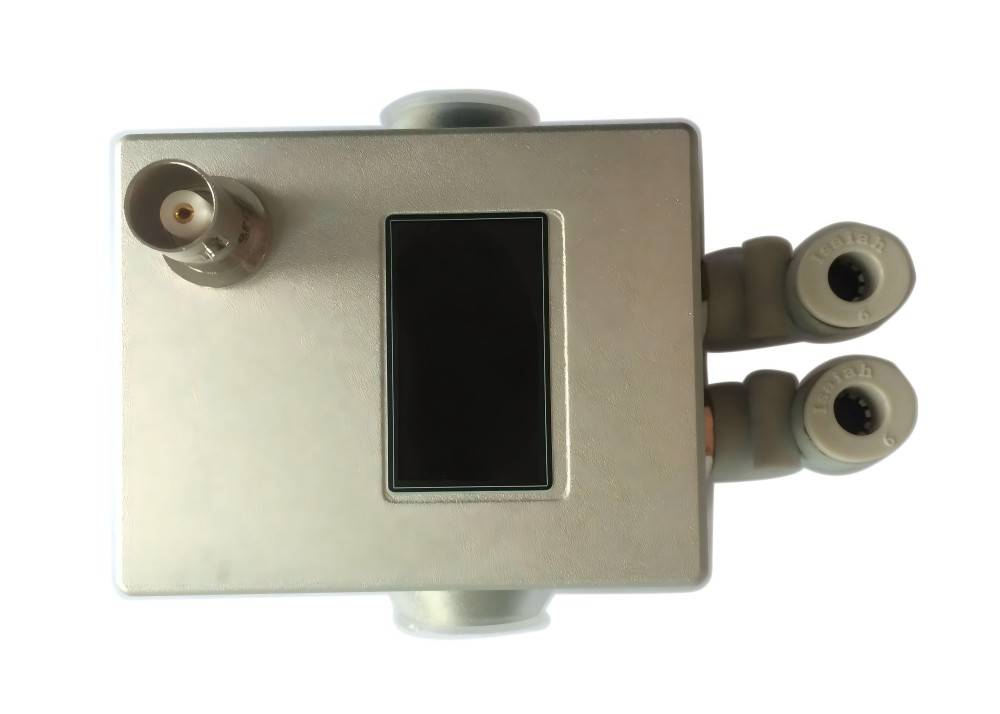
Most problems with Q-switches are not sudden device failures but rather issues at the system level. Factors such as RF drive stability, optical alignment, timing, and thermal effects all affect performance. Even minor flaws in any of these aspects can lead to significant failures.
The best way to troubleshoot is to proceed step by step: measure the RF stability, observe the thermal behavior, check the alignment, and eliminate variables one by one. Usually, the Q-switch itself is not faulty; it only needs to correct the system-level factors to restore its reliable and stable operation.