Fiber Delay Lines in Test & Measurement: Boosting Accuracy for High-Speed Electronics
High-speed test and measurement systems are no longer constrained by the discernment of their instruments. With these systems having means of greater bandwidth and distribution in their architectures, timing uncertainty has played a dominant role in the determinants of measurement errors. Here, fiber delay lines find more use as system-level enablers of accuracy and repeatability.
Timing Uncertainty as a Core Limitation in High-Speed Test & Measurement Systems
In modern high-speed test and measurement systems, such as RF, microwave, mmWave, and optical, timing uncertainties can crop up in several important forms:
- Trigger Misalignment between Instruments
- Path length mismatch across channels
- Phase Drift over Temperature and Time
These effects increase in proportion with the increase in the frequency band. Specifically, in multi-GHz frequency bands, picosecond-scale delay error causes changes in amplitude, phase, as well as EVM deviations, which were initially issues of calibration, not the architecture of the test system.
Hence, as systems progress to increased bandwidth and more stringent synchronization requirements, attempts to compensate for these effects within software become less and less reliable. This has created a need for physically stable and predictable delay elements within these systems.
Why Fiber Delay Lines Outperform Electronic Delay Solutions in Precision Measurement
Electronic delay solutions remain attractive for their compactness and tunability, but in precision measurement they introduce limitations that become difficult to manage at high frequencies:
| Aspect | Electronic Delay | Fiber Delay Line |
| Bandwidth linearity | Limited, frequency-dependent | Inherently wideband |
| Phase noise contribution | Non-negligible | Near-transparent |
| Long-term stability | Sensitive to temperature & aging | Highly stable |
| EMI susceptibility | Present | Immune |
The time delay of fiber delay lines is passive, linear, and free from distortion in signal spectrum content or any appreciable jitter. For phase-sensitive, wideband signal measurements, this is not merely a theoretical consideration—it makes a difference in results.
As its measurement budgets become tighter, electronic delay is now regarded as a design convenience by many system designers. In contrast, fiber delay is regarded as a reference-grade solution.
Improving Measurement Repeatability with Ultra-Stable Fiber Optic Delay Lines
In the production test and advanced R&D environment, repeatability can be more important than absolute delay accuracy. A delay that is slightly offset but perfectly stable can be compensated; a drifting delay cannot.
- Ultra-stable fiber optic delay lines help resolve this with:
- Very low variation in group delay over temperature
- Negligible mechanical sensitivity when properly packaged
- Predictable ageing behavior over years, not months
This stability translates into consistent measurement results over calibration cycles, shifts, and environmental conditions. In contrast, systems containing active or electronically adjustable delays often experience subtle variations that only appear in long-term data analysis.
The repeatable characteristics in f iber delay lines stand directly for what is needed to realize the goal of correlation between labs, instruments, and time in high-speed electronics testing.
Fiber Delay Lines in Wideband and Multi-Channel Test Architectures
Wideband/multi-channel test systems have much more stringent requirements on timing alignment in contrast to single-path system tests. When the bandwidth of a test system increases, discrepancies in channel-to-channel timing alignment cause statistically significant phase error, amplitude ripple, and distortion in test results such as EVM and S-parameters. In the case of systems having parallel RF or optical paths, such errors cannot be precluded through digital correction.
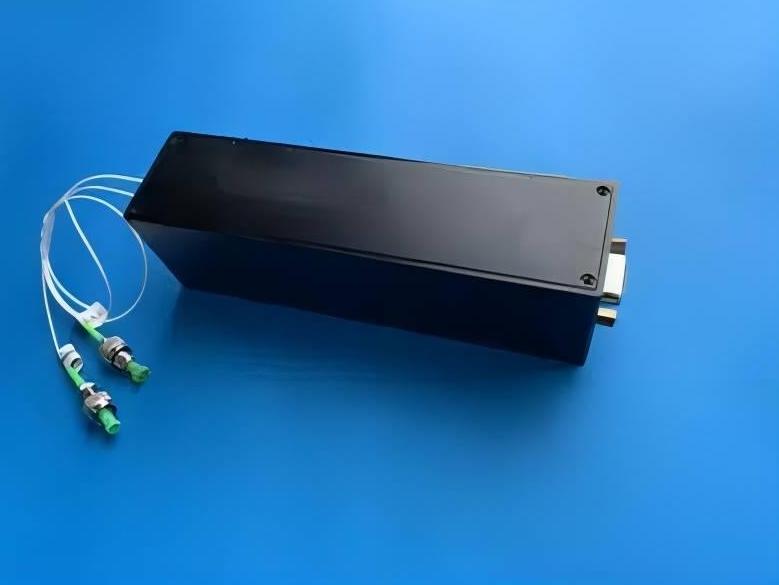
A practical way to enforce deterministic timing relationships between the channels is to use fiber delay lines. On the one hand, once the fiber delay lines are implemented, deterministic delay relationships can be achieved. On the other hand, fiber delay lines exhibit passive stability, which makes channel scaling easier, especially in terms of MIMO systems, phased arrays, and ATE systems with high channel counts. Fundamentally, the physical layer is being utilized to preserve integrity, which is usually challenging with increasing complexity.
Fiber Delay Line Specifications That Directly Impact Test System Accuracy
In high-speed test systems, the effect of a fiber delay line is no longer described by specification levels, but by how these specification levels behave. The table below represents the parameters that directly affect the system-level measurement precision as follows:
| Specification | Why It Matters in Test Systems |
| Delay tolerance over temperature | Determines timing stability across operating conditions and directly affects phase and amplitude accuracy. |
| Long-term drift and aging | Impacts calibration intervals and result consistency over months or years. |
| Insertion loss stability | Variations introduce amplitude uncertainty that cannot be fully corrected in post-processing. |
| Polarization effects (PMD/PDL) | Critical for coherent, phase-sensitive, and optical measurement setups. |
| Mechanical and environmental robustness | Prevents delay variation caused by vibration, handling, or installation stress. |
If one focuses only on the accuracy of the delay, then the secondary effects are obscured. Stability is what ultimately determines the accuracy limit of the entire test system, not the value in the data sheet.
Selecting a Fiber Delay Line Manufacturer for Next-Generation Test Systems in 2026
As test and measurement systems continue to progress in terms of bandwidth, synchronization, and deployment lifecycles, the decision to select a manufacturer of fiber delay lines is not based on the component level but on the system level. What is more important beyond the specifications is the need to provide manufacturing consistency, stability, and the capabilities to provide matched or custom fiber delay line solutions that support complex test system architectures.
Our fiber delay lines are optimized for high-speed test and measurement applications, emphasizing delay characteristics as a function of temperature, low drift as a function of time, and consistent performance among different product batches.
If the accuracy of your test system is bounded by timing uncertainties, it may be appropriate for you to reconsider the current delay architecture. Please contact us for a discussion of how we could assist you with our fiber delay line products!