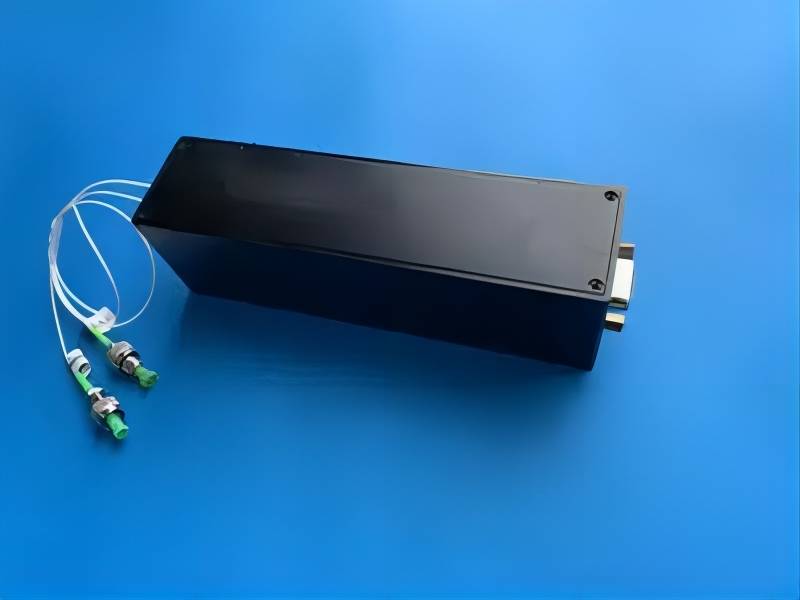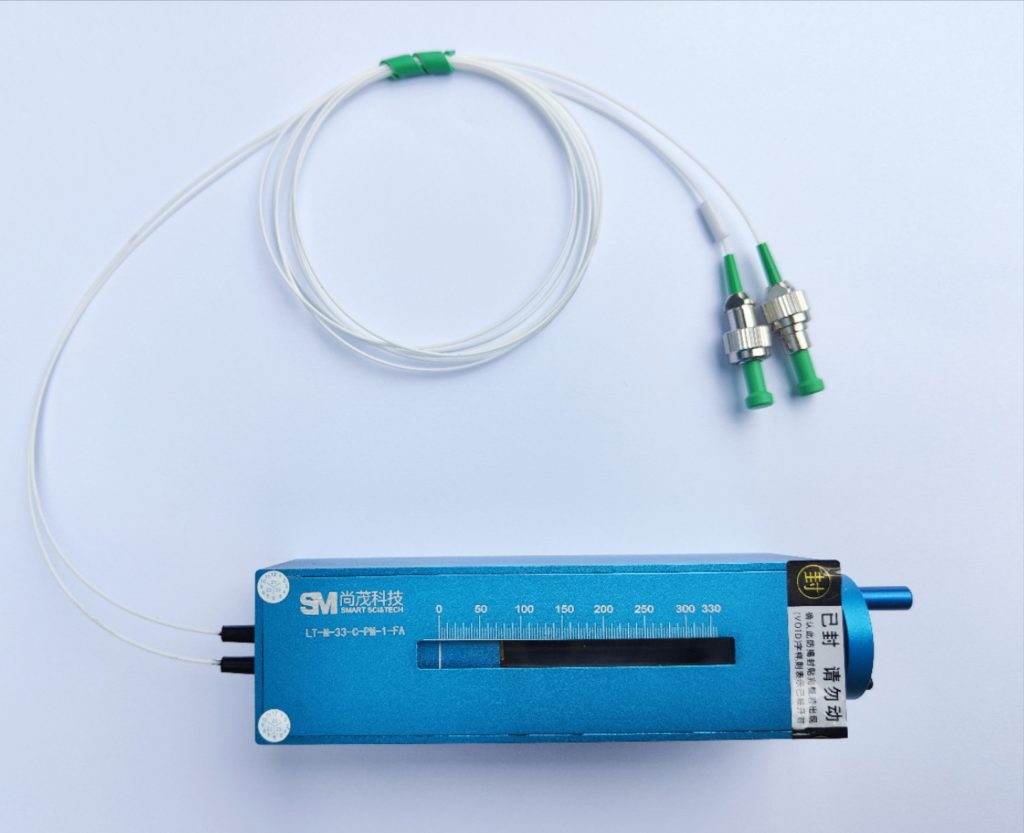
How Tunable Optical Delay Lines Work: Key Mechanisms & Design Trade-offs
As the demand for optical systems that have larger bandwidths, lower latency, and tighter synchronization increases, the ability to control signal timing with sub-nanosecond precision goes from being a performance advantage to a necessity.
This necessity is addressed by the tunable optical delay line. Unlike fixed structures, which provide a single static delay, tunable systems enable real-time fine adjustments to timing in response to environmental drift, reconfiguration of system behavior, and optimization of coherence across multiple channels. When combined with the natural low-loss characteristics of a fiber optic delay line, tunable architectures offer a scalable way to achieve precise timing control without compromising signal quality.
What Is a Tunable Optical Delay Line?
A tunable optical delay line is used for precise photonics in adjusting the timing of an optical signal without requiring conversion to the electrical domain. Unlike conventional electrical delay components, optical delay lines achieve time delay through controlled losses in the optical path length, resulting in a highly stable and low-loss system.
This device uses the basic principle of physics that light travels in a fiber at a constant speed. To achieve this, a tunable ODL can extend or shorten the optical path to adjust the time of the signal’s arrival. This is important for phase alignment, pulse shaping, channel synchronization, or coherent signal processing.
Typical use cases include:
- Microwave photonics
- Optical communication system testing
- Beamforming in phased-array antennas
- Coherent LiDAR
- Quantum optics and metrology
At the heart of most architectures is some form of fiber optic delay line, which assures stable, low-distortion transmission with excellent immunity to electromagnetic interference.
Why Choose Tunable ODLs vs. Fixed Solutions
Traditional fixed fiber optic delay lines have long provided stable, pre-determined timing values for applications where delay conditions never change. They are easy to deploy and highly reliable. However, as system architectures evolve-particularly in phased-array antennas, coherent sensing, and optical test environments, and more applications are requiring dynamic phase alignment or adaptive timing control that fixed components simply cannot support.
A tunable optical delay line provides, in real time, continuous or step-based adjustments to optical delay, which is far more versatile than static alternatives. Engineers can quickly compensate for drift, temperature fluctuation, or configuration changes without rewiring or installing additional hardware.
Key benefits of tunable ODLs include:
- On-demand delay control: Instantly shift the timing to keep the system performing optimally.
- High precision: Constant phase matching with fine resolution of less than a picosecond achieves superlative synchronization.
- Reduced hardware complexity: One module instead of several fixed delay fibers minimizes system complexity and streamlines inventory.
- Improved adaptability: Dynamic signal conditions, variable test configurations, and multi-band operations are easily handled.
- Improved calibration: Dynamic system tuning helps to calibrate and control system drift over time.
In scenarios where timing precision and adaptability of a system are paramount, tunable ODL technology outperforms fixed fiber-based delay options.
How a Tunable Fiber Optic Delay Line Enables Precise Timing Control
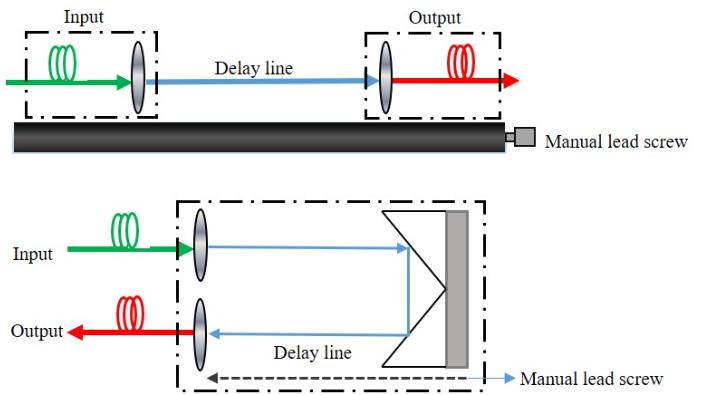
To understand delay lines, let’s look at it conceptually: You can delay a signal by making it travel further. This is what a traditional fiber optic delay line does. It uses a long, fixed coil of fiber optic cable that generates a specific and constant time delay.
Tunable optical delay lines, on the other hand, change the concept of a static tool into a more dynamic one. Instead of a single and fixed concept, think of it as a complex “optical trombone”. Just like a trombone, in which the slide action changes the length of the air passage and thus the air column’s pitch, a tunable optical delay line changes the effective length of a light path to control the timing of the light extremely accurately.
- This is governed by the fundamental relationship: Delay = Optical Path Length / Speed of Light. The “Optical Path Length” is the physical distance multiplied by the refractive index of the medium. Tunability is achieved by skillfully adjusting one of these two factors:
- Varying Physical Distance: This is the technique employed by free-space systems, which utilize a movable mirror to physically move the mirror closer or further away to change the length of the air path the light traverses.
- Varying Refractive Index: This occurs often in solid-state systems, where the refractive index of a waveguide is changed by applying heat or an electric field. This alters the light’s speed within the waveguide, thus “stretching” or “compressing” the optical path in the waveguide to the light, without any mechanical components.
With precise control of optical distance or refractive index, modern optical systems use these tunable optical delay lines to impose precise time delays to the order of nanoseconds and even down to picoseconds. This is the most important feature of high-speed optical systems.
Key Operating Mechanisms Inside a Tunable Optical Delay Line
Modern tunable optical delay lines use various techniques to change optical path length, each balanced to meet a different set of application-specific requirements: tuning range, resolution, speed, and insertion loss. Knowing these primary strategies enables engineers to choose the right option for their system.
1) Mechanical Fiber Stretching
This method incorporates piezoelectric actuators and other mechanical systems to stretch and release fibers. The length of optical fibers determines the delay of the signal. The longer the optical fiber, the greater the delay.
Pros: Extremely high tuning resolution, precision of even less than a picosecond
Cons: Poor dynamic range, sluggish tuning speed
2) Switchable Fiber Paths
Light can be switched and routed through different length fibers. A tunable delay can be accomplished by selecting the appropriate length of fiber pre-defined segments.
Advantages: Increased and repeatable range. Straightforward implementation.
Limitations: Delay tuning is step-based, which may be undesirable in certain applications.
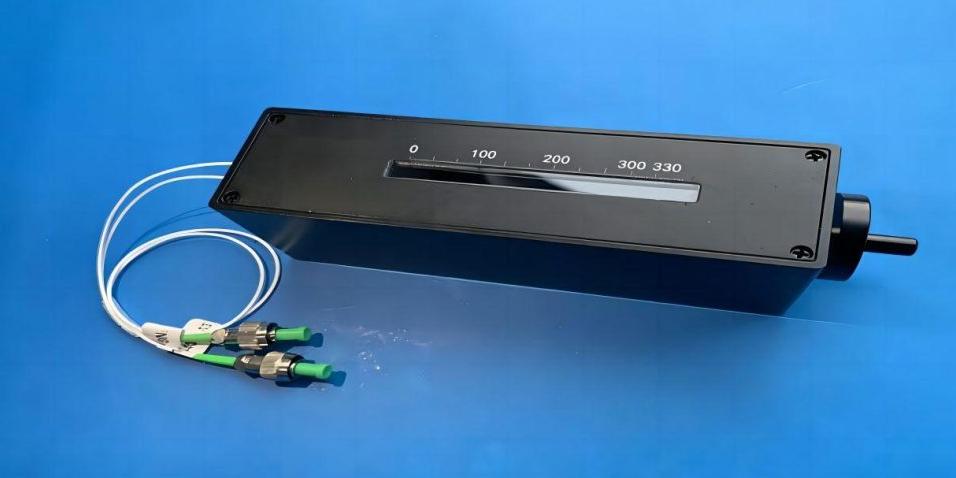
3) Variable Refractive Index Control
More advanced photonic structures enable the adjustment of a delay through the refractive index of the optical medium, be it a waveguide, integrated optical, or other structure. These include thermal, electro-optic, or acousto-optic modulation methods.
Advantages: High speed and compact physical size due to continuous tuning.
Limitations: Increased insertion loss and temperature sensitivity.
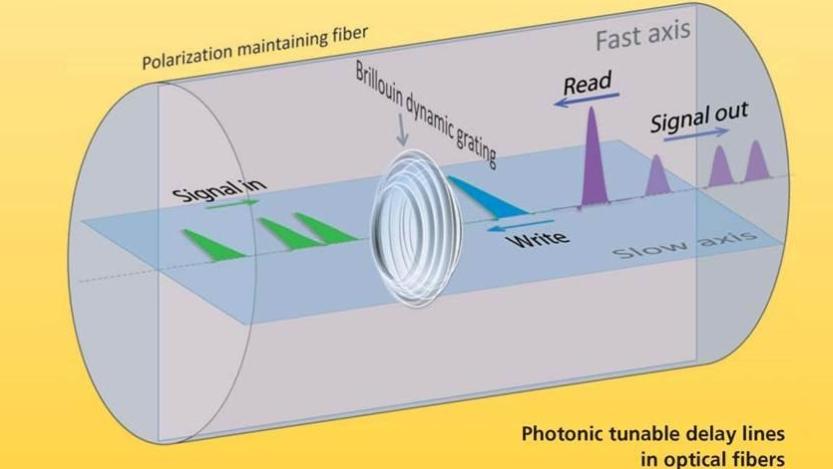
4) Dispersion-Centric Delay Control
This approach employs specialty fibers or chirped fiber Bragg gratings, which utilize the wavelength-dependent group velocity. Paired with a tunable light source, this combination enables the user to make very precise adjustments to the delay.
Advantages: Large adjustment range, which is ideal for laboratory settings and high-resolution applications.
Disadvantages: Greater system integration complexity and control over the wavelength are needed.
With respect to each mechanism, the relationships among range, precision, speed, and complexity illustrate the existence of trade-offs. These parameters can be optimized for each mechanism to create tunable ODLs that can be used in a wide range of applications like optical communications, coherent sensing, and phased arrays. The Responsibilities include the proper choice of combined approaches to design, which range in complexity from high to low.
Design Trade-Offs in Tunable Optical Delay Line Solutions
Creating a tunable optical delay line that performs well on all desired metrics requires trade-offs on accuracy, speed, and dependability. These trade-offs must be sought for effective system engineering.
Tuning Range Versus Resolution
A device that covers a large tuning range accommodates considerable delay modifications. However, this range does not permit the system to achieve high resolution. An example is switchable fiber paths, which provide a range system, while mechanically, optical fiber is stretched to cover a more limited range.
Device Size Versus Maximum Delay
Long delay times will cover more fiber and increase the delay line footprint. While integrated photonic solutions compact the design, they still depend on refractive index tuning and dispersion engineering to achieve the delay, which is often more complicated.
Switching Speed vs. Insertion Loss
Fast tuning technologies like electro-optic or MEMS-based switches let you quickly change delays but can add more insertion loss. On the other hand, simpler mechanical systems have low loss but their response times are slow.
Stability vs. Environmental Sensitivity
Delay line fibers provide good stability, but temperature and mechanical vibrations’ lack control will disturb the performance. Active compensation and strong packaging solutions can help control these, but it can also raise the price and add complexity to the system.
Cost vs. Integration
Highly integrated tunable ODLs combine several tuning mechanisms and compact designs for advanced applications and offering superb automation and performance. Integration often means additional manufacturing and system expenses.
When it comes to tunable optical delay line design, the optimal choice comes down to weighing the application’s priorities, whether that be ultra-high precision, broad dynamic range, fast reconfiguration, low insertion loss, or compact form factor. Careful consideration of these trade-offs allows for dependable and efficient timing control in optical systems.
Final
From coherent sensing and microwave photonics to phased-array beamforming and optical R&D platforms, the tunable optical delay line continues to play a very essential role in next-generation timing control systems. Tunable ODL technology provides a high-precision tool by virtue of leveraging the inherent stability of the fiber optic delay line while offering real-time adjustability.
Through careful weighing of core mechanisms, tuning architecture, and design trade-offs, the best balance of range, resolution, speed, and cost is ensured. As demands for system bandwidth and precision continue to rise, tunable ODLs will remain an indispensable cornerstone in advanced photonic design.
Looking for more tunable optical delay lines resources and solutions? Contact SMART SCI&TECH now to get complete product specifications, pricing, and professional support.