How Wavelength Choices Impact AOM Performance in Laser Systems?
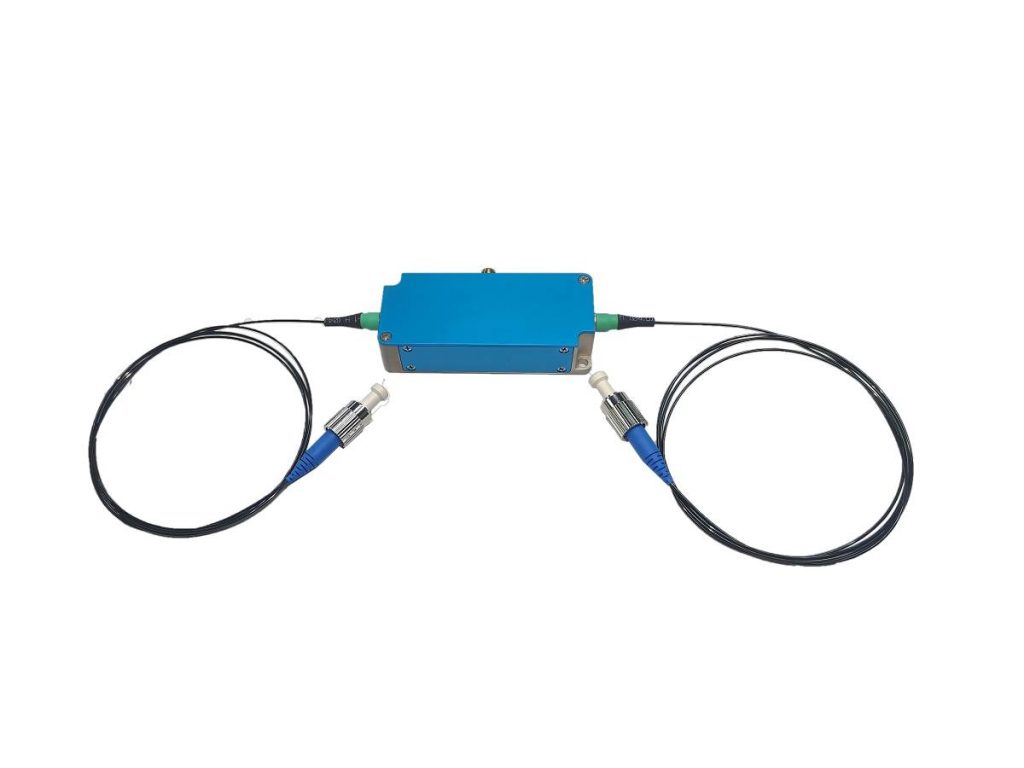
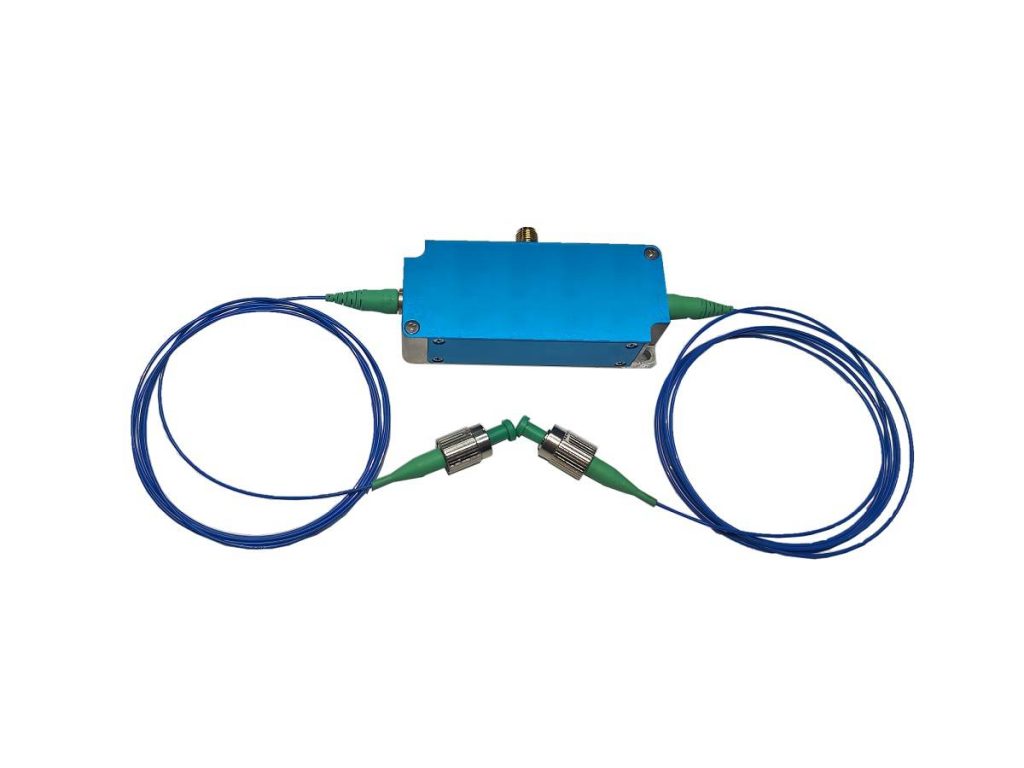
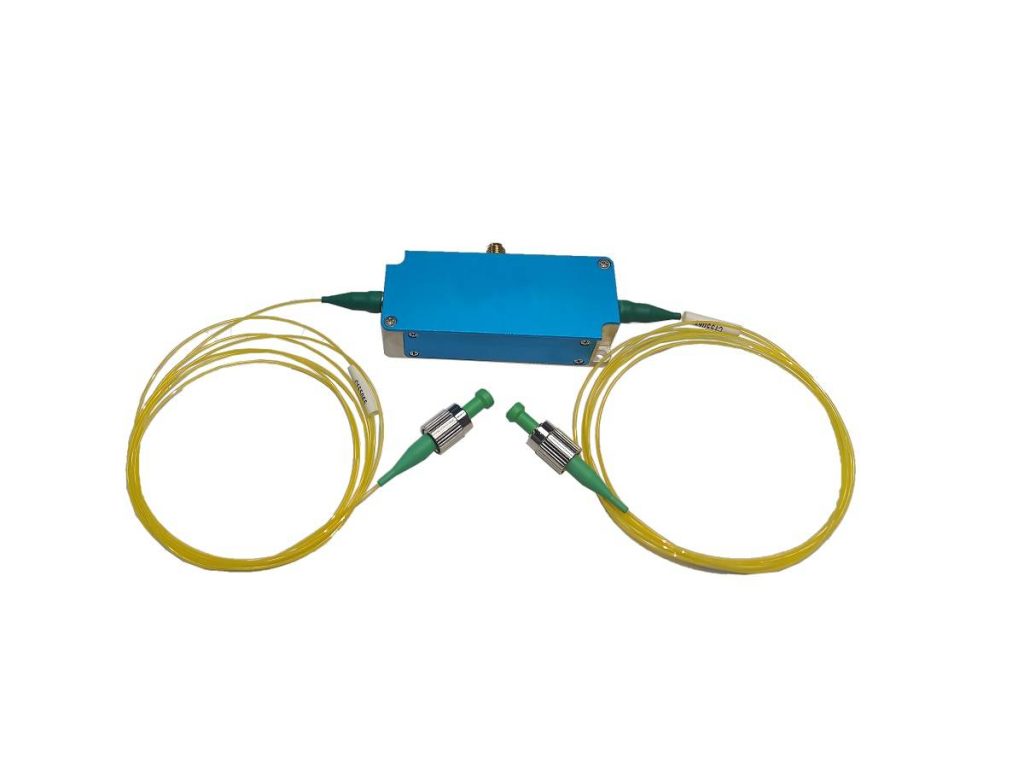
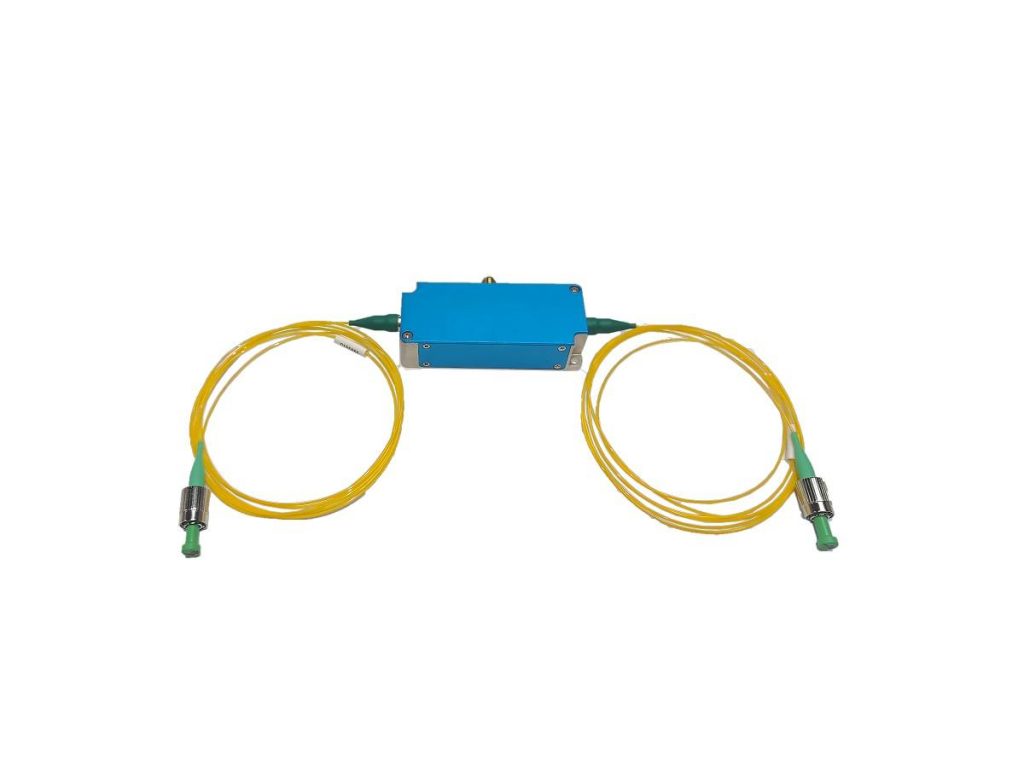
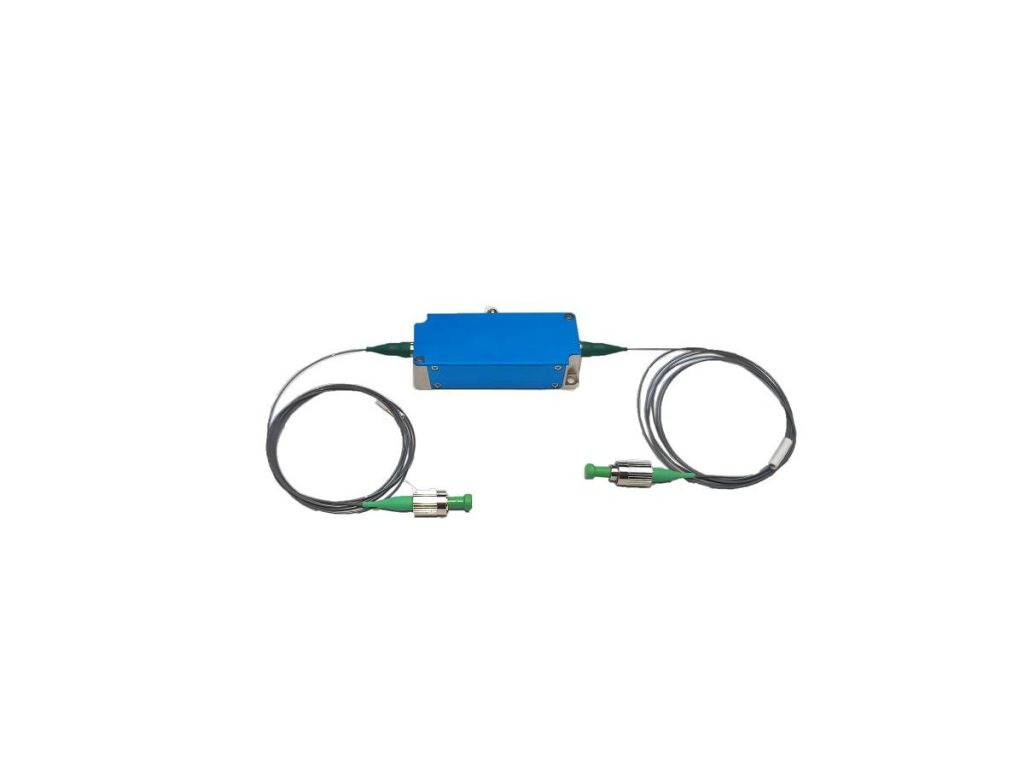
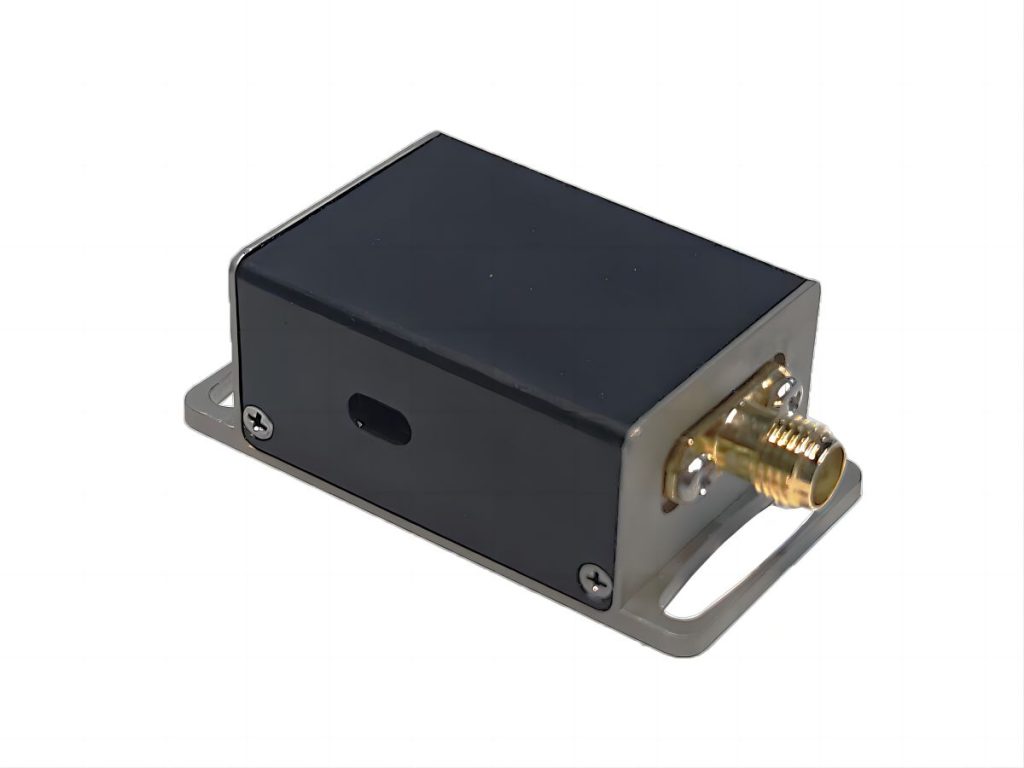
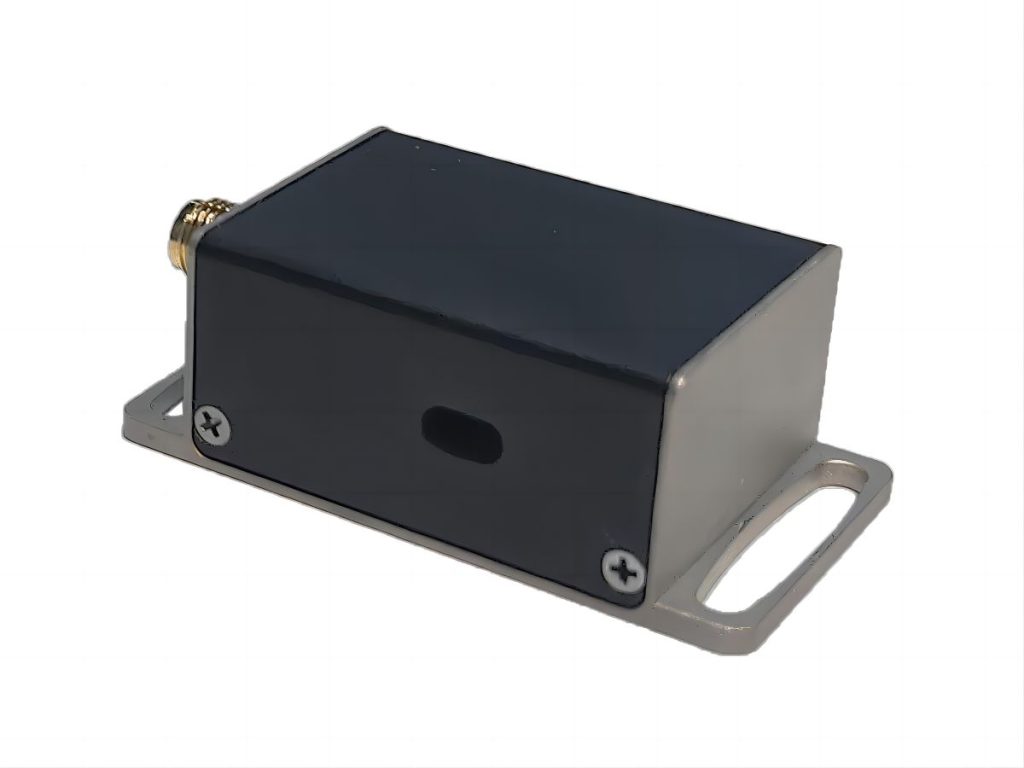
In a high-performance laser system, the Acousto-Optic Modulator (AOM) is the interface between electronic control and optical output. It is used in intensity, pulse picking, and frequency shifting applications, and the performance is not a constant but varies depending on the specific wavelength of the source.
If the AOM is chosen without a critical evaluation of the compatibility of the wavelength, then two major failures can result: inefficient diffraction and hardware damage. This article will delve into the technical nuances involved in wavelength dependency, providing the data necessary to optimize the acousto-optic modulators for peak performance.
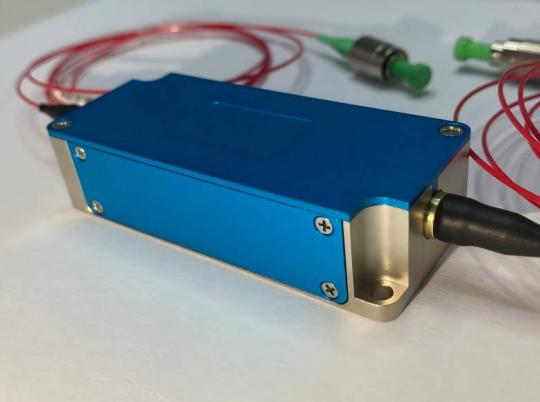
The Physics of Wavelength in Acousto-Optics
To understand how wavelength governs AOM performance, one must look at Bragg Diffraction. When an RF signal is applied to the piezoelectric transducer, it creates a strain wave that acts as a moving phase grating.
The Bragg Angle Relationship
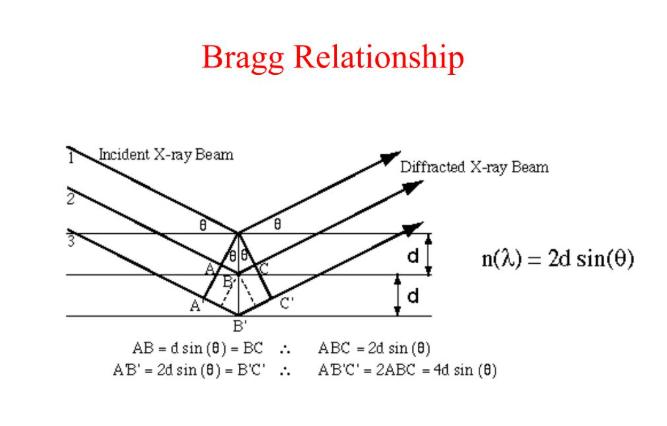
The deflection of the laser beam is governed by the Bragg condition. The angle of diffraction (theta_b) is directly proportional to the wavelength:
theta_b = (lambda * f) / (2 * Va)
Where lambda is the optical wavelength, f is the acoustic frequency, and Va is the acoustic velocity in the crystal. This formula reveals that for a fixed RF frequency, a longer wavelength (such as 10.6µm from a CO2 laser) will result in a much larger diffraction angle than a UV wavelength (355nm). This spatial separation is critical for physical beam blocking and system alignment.
Diffraction Efficiency and RF Power
Wavelength also determines the amount of RF power needed to “drive” the modulator. The equation for the diffraction efficiency (eta) is derived from the Figure of Merit (M2) and the drive power (Pa):
eta = sin^2((pi * L / lambda) * sqrt(M2 * Pa / 2H))
Since the wavelength is in the denominator, as the wavelength increases, the amount of RF power needed to drive the modulator increases quadratically. This is why IR AOMs require more cooling and more RF drive power than their visible counterparts.
Material Selection: Matching Crystal to Wavelength
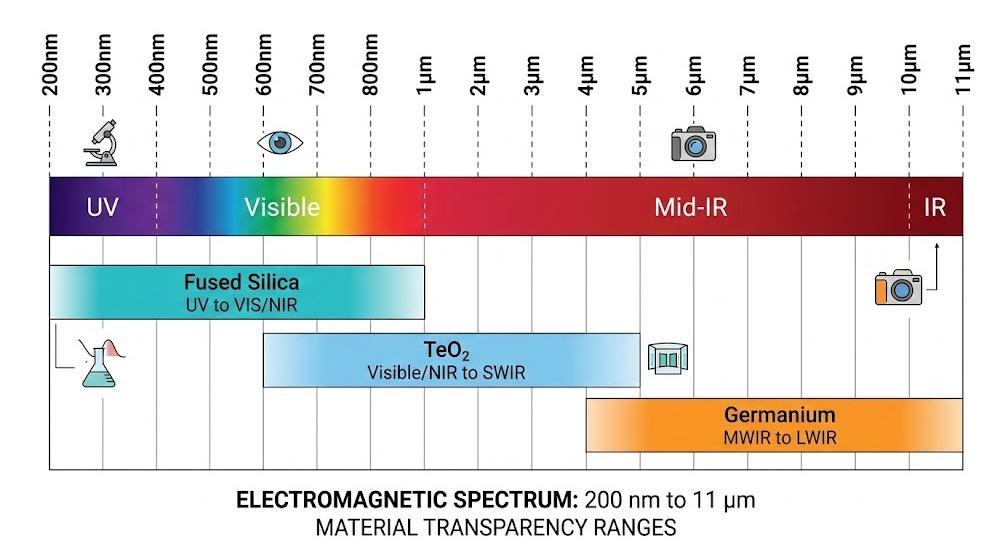
The internal crystal or interaction medium is arguably the most important hardware factor in an Acousto-Optic Modulator (AOM). As all materials have a distinct transmission window with an M2 that depends on the wavelength of the light being used, the crystal used must match the spectral output of your laser for optimal system performance.
Ultraviolet (UV) Spectrum (200nm – 400nm)
High-energy UV photons have a high probability of causing “solarization” or “color centers” that can cause crystals to fail. Fused Silica is the “industry standard” for UV crystals owing to its high transmission in this region. Fused Silica has a relatively low M2; consequently, it requires substantially higher RF drive powers to attain the same diffraction efficiency as materials used in the visible spectrum.
Visible to Near-Infrared (NIR) Range (400nm – 1100nm)
Tellurium Dioxide (TeO2) is predominant in this region. This material is preferred because of its extremely high acousto-optic efficiency, enabling compactness and reduced RF power requirements. For high-power NIR lasers like 1064nm fiber lasers, Crystalline Quartz and Tellurium Dioxide materials are often used for balancing efficiency and thermal stability.
Short-Wave Infrared (SWIR) to Mid-IR (1100nm – 11µm)
Moving towards the infrared region, crystals start absorbing light, causing thermal lensing. For 2µm to 5µm applications, Lithium Niobate (LiNbO3) is often employed. For far-infrared applications, specifically for CO2 lasers at 9.4µm and 10.6µm, Germanium (Ge) is considered the best material. Germanium is totally opaque to the human eye but is very efficient for IR modulation, though it demands very rigorous water cooling.
Impact on Key Performance Metrics
Selection of the wavelength affects all functional specifications of the laser.
Here are some examples.
Rise Time and Modulation Bandwidth
The rise time of an AOM is determined by the time required for the sound wave to cross the laser beam. Shorter wavelengths allow tighter focusing of the beam because the beam waist (w0) is directly proportional to the wavelength. This inherently allows faster rise times and modulation bandwidths. In the Infrared (IR) band, the beam waist is so large that unless high-velocity materials or extremely tight focusing optics are used, faster switching speeds are not possible.
Optical Damage Threshold
Shorter wavelengths carry higher photon energy.A device may have a damage threshold of 100W at 1064nm but may have a damage threshold of just 5W at 266nm. This means that a larger aperture or different geometry may be necessary in the UV range to increase the density and avoid dielectric failure. The engineer must make sure that the density is at a level significantly below the damage threshold for the wavelength in question.
Extinction Ratio and Beam Divergence
The “off” condition for an AOM is dependent on the purity of the Bragg interaction. Beam divergence is also more significant at longer wavelengths. If the divergence of the laser beam is comparable to the Bragg angle, then “crosstalk” can result between the 0th and 1st order beams, thus reducing the extinction ratio and therefore the contrast ratio.
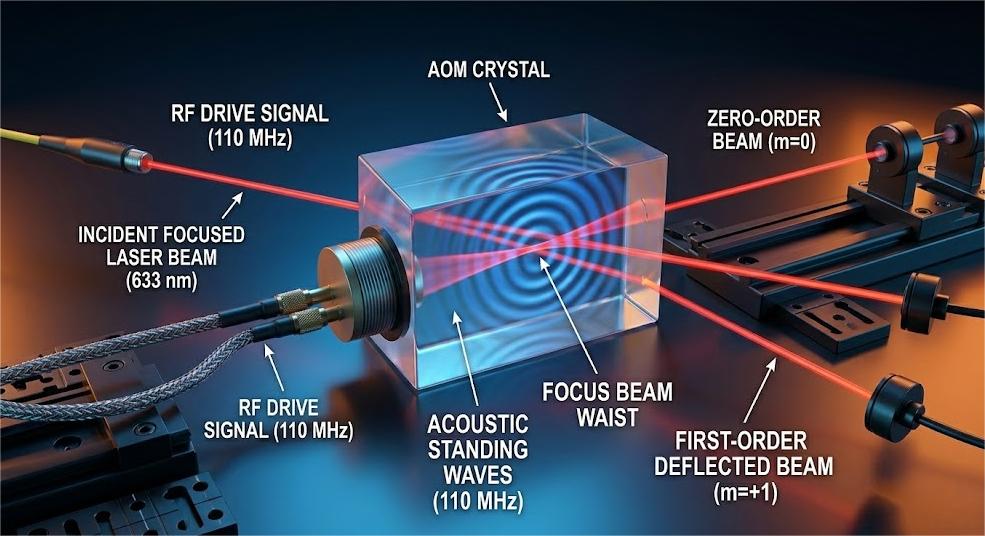
Optimizing AOM Efficiency Across the Spectrum
Achieving peak performance for an Acousto-Optic Modulator (AOM) demands accurate environment optimization, starting with wavelength-dependent coatings for Antireflection (AR). Coating differences of as little as 50nm can increase Insertion Loss from less than 0.2% to more than 2%, leading to excessive heat absorption and thermal lensing of the laser beam.
Additionally, Radio Frequency (RF) drivers need to be selected according to wavelength. For shorter wavelengths, higher frequencies of up to 300MHz are often employed for compactness, whereas longer wavelengths use lower frequencies between 20 and 40MHz for thermal management and maintaining a stable Bragg angle.
Lastly, the orientation of polarization is of utmost importance, especially for birefringent materials such as Tellurium Dioxide (TeO2). For these materials, diffraction efficiency is strictly dependent on the orientation of linear laser polarization, either parallel or perpendicular to the acoustic wave, for maximum power coupling.
Practical Selection Checklist
When specifying an AOM, this technical checklist can be used to verify compatibility in terms of wavelength:
- Wavelength Range: Is the crystal transparent at this particular wavelength? Is there a particular absorption peak in the data sheet?
- Aperture Size: Is the active aperture sufficiently large to accommodate the beam diameter at this particular wavelength? Infrared beams are usually larger.
- RF Driver Power: Is there sufficient wattage in the driver to reach the saturation point at this particular wavelength?
- Duty Cycle: Will the heat generated by the high RF power necessary for the longer wavelengths require water cooling or simply conductive cooling?
- Pointing Stability: Does the mechanical mount provide for the required Bragg anglenecessary for the selected ratio of frequency to wavelength?
By focusing on wavelength as the key design constraint in the design phase, you can be certain that your Acousto-Optic Modulator will meet the demands necessary for high-performance laser applications.
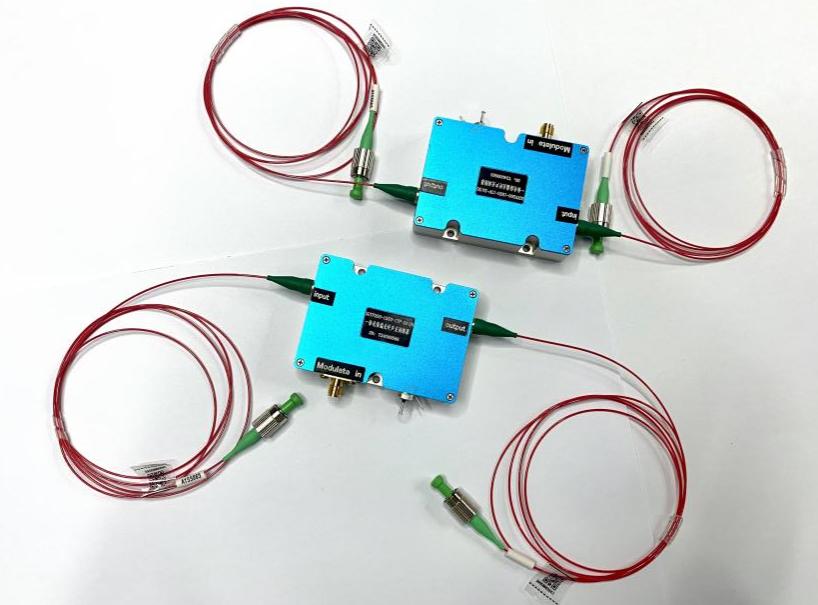
Want to find the ideal AOM for your specific wavelength requirements? Contact our engineering team today for a custom AOM selection consultation.