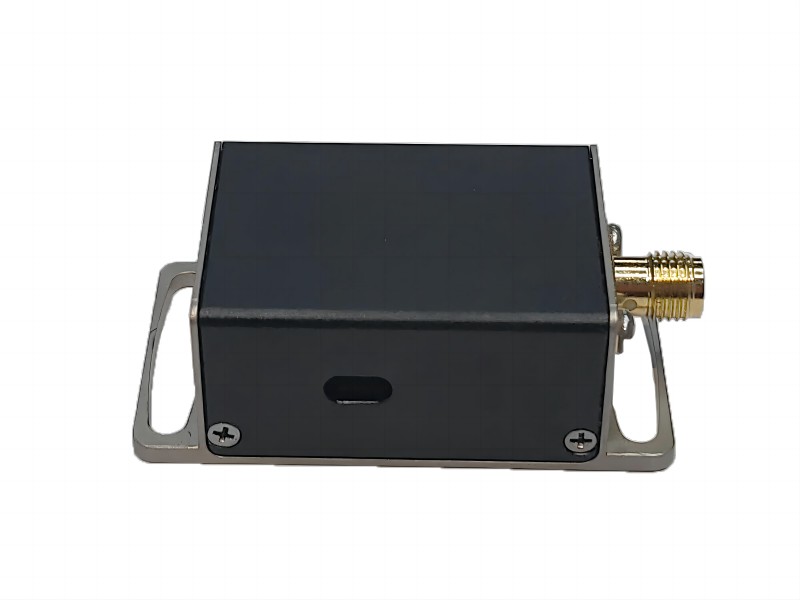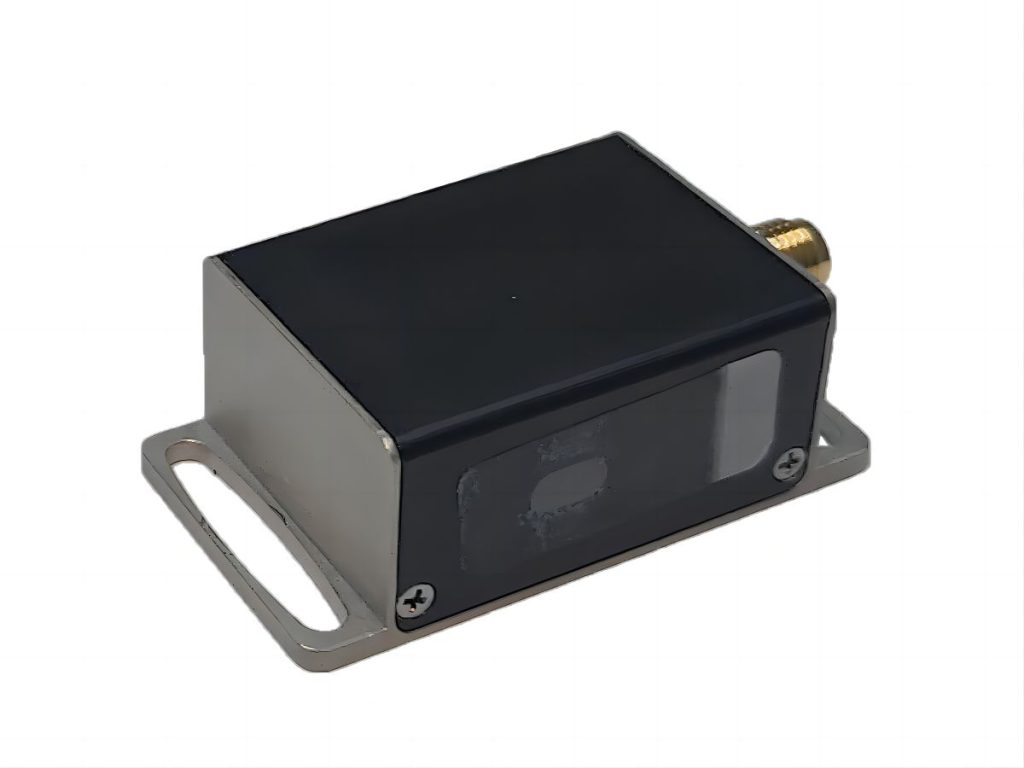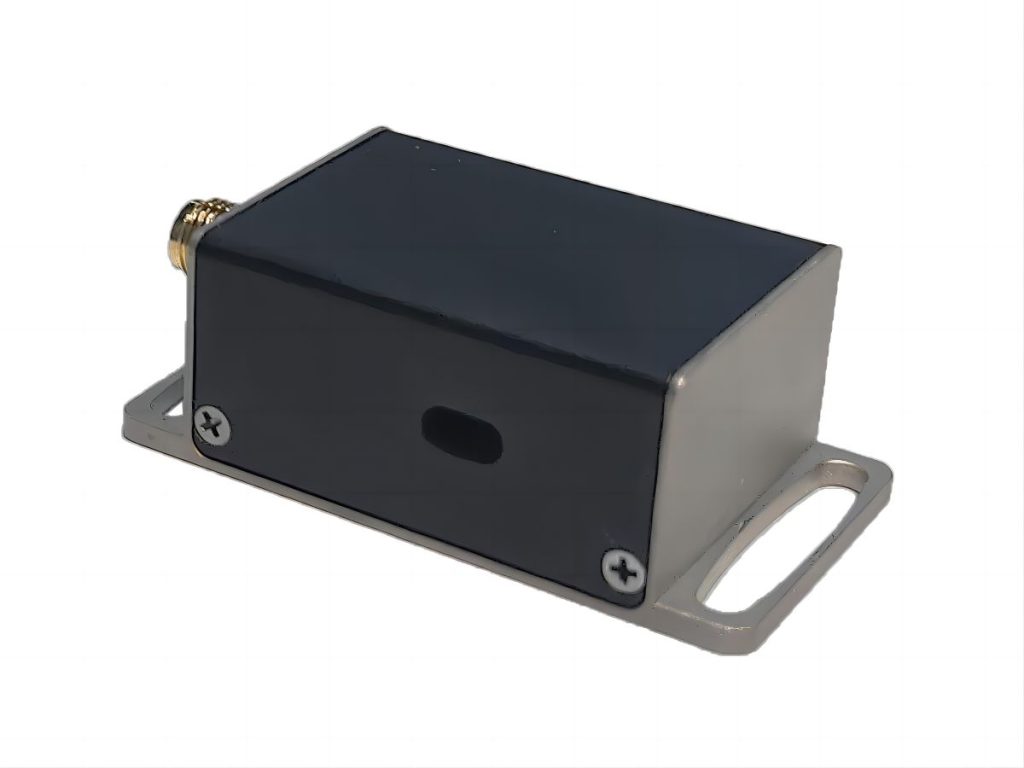
What Determines the Resolution and Speed of an Acousto-Optic Deflector?
In contemporary photonics and laser technology, acoustic-optic deflectors (AODs) are essential for the precise, high-speed beam steering. From laser microscopy and material processing to quantum optics and semiconductor inspection, the performance of an AOD directly determines how fast and how accurately a laser beam can be controlled. When engineers evaluate an acoustic optical deflector, two specifications dominate the discussion: resolution and scanning speed. These parameters define how finely the beam can be positioned and how rapidly it can be moved. Understanding what influences them helps researchers, OEMs, and integrators choose or design the most suitable AOD acousto-optic deflector for their system.
Working Principle of an Acousto-Optic Deflector
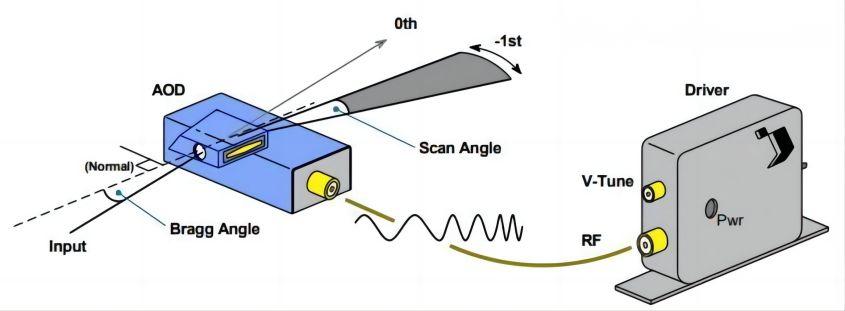
An acousto-optic deflector operates through the interaction between light and sound within a transparent crystal. When an acoustic wave propagates through materials suas tellurium dioxide (TeO2) or fused silica, it creates a periodic variation in the refractive index due to the photoelastic effect. This periodic modulation acts as a moving diffraction grating for an incoming laser beam.
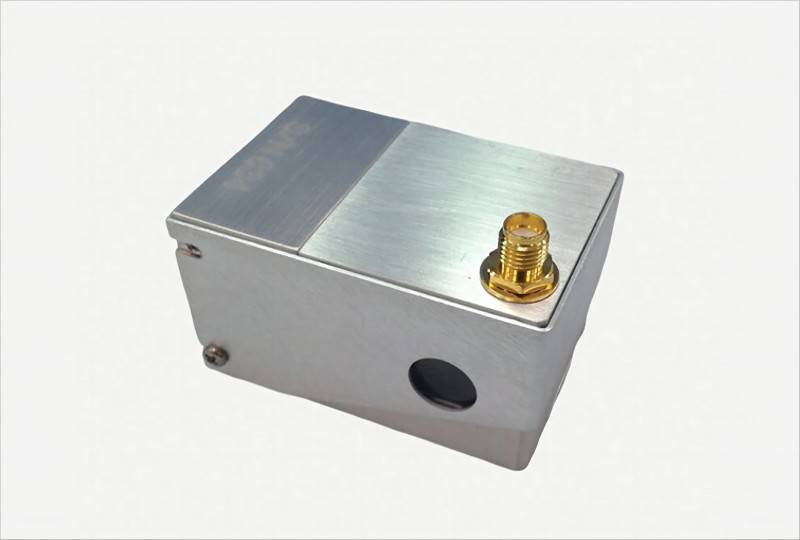
When the incident light meets this dynamic grating at a specific angle—known as the Bragg angle—the light is diffracted into a new direction. The deflection angle (θ) depends on the acoustic frequency (f) according to the Bragg condition:
θ = (λ × f) / (2 × n × v)
where λ is the laser wavelength, n is the refractive index of the medium, and v is the acoustic velocity.
The acoustic optical deflector electronically modulates the frequency of the applied sound wave to steer the beam smoothly and continuously without any mechanical movement. The electronic control allows AOD acousto-optic deflectors to attain microsecond-level response times, suitable for high-speed scanning, laser modulation, and beam positioning applications. Fundamentally, the working principle integrates optical precision with acoustic agility, providing a reliable and inertia-free method to enable the modulation of laser beams in advanced photonic systems.
Key Parameters That Influence Resolution in an Acoustic Optical Deflector
The resolution of an acoustic optical deflector provides the amount of accuracy to be achieved for the laser beam position in the scanning range. In practical use, therefore, it describes the amount of difference in how many distinct pointed or addressable points a beam can give out. There are a variety of physical and design features that have a direct impact on this performance.
Acoustic Bandwidth
It accounts for the overall range of frequencies that achieve diffraction efficiently in the crystal. The higher the bandwidth, the greater the variation in deflection angle, resulting in more resolvable points and higher spatial resolution. Broad bandwidth is needed for accurate transducer design, efficient acoustic coupling, and low internal crystal attenuation.
Optical Aperture and Beam Diameter
The optical aperture size and diameter of the incident beam are important in determining angular resolution. A larger aperture allows finer deflection steps, as the optical beam contacts more acoustic wavefronts. On the other hand, although the aperture increases, so does the resultant acoustic power and scanning speed required to be achievable, and so there must be a balance.
Properties of material and speed of sound
The material used in an AOD acousto-optic deflector strongly contributes to the resolution. Crystals like tellurium dioxide (TeO2) have a relatively slow acoustic speed, which increases angular sensitivity and diffraction efficiency. Choosing the correct material can help engineers achieve high resolution while maintaining acceptable power handling and optical quality.
Laser Wavelength Compatibility
This necessitates a careful specification of laser wavelength for the acousto-optic deflector. Because the diffraction efficiency depends on the Bragg condition, small discrepancies in wavelength can decrease resolution and optical throughput for the proposed solution. Optimization of the crystal and acoustic frequency to the desired wavelength allows stable, consistent performance.
Collectively, these parameters describe how finely an acoustic optical deflector can manage the beam position. An understanding of and optimization of these parameters is crucial in the design of high-resolution laser scanning and imaging devices or beam-steering systems.
Factors Affecting the Scanning Speed of an Acousto-Optic Deflector
Multiple interrelated factors influence the scanning speed of an acousto-optic deflector. The table below summarizes the key elements, their effect on speed, and considerations for optimizing performance in AOD acousto-optic deflectors.
| Factor | Effect on Scanning Speed | Key Considerations |
| Acoustic Transit Time | Determines the minimum response time; shorter transit → faster beam movement | Reduce beam diameter or use higher acoustic velocity materials to minimize transit delay |
| RF Driver Agility | Controls how quickly the acoustic frequency can be changed | High-speed, wideband RF drivers allow microsecond-level deflection updates |
| Thermal Effects & Power Handling | Excess heat can slow acoustic response and reduce stability | Proper thermal management and heat dissipation maintain consistent speed |
| Crystal Orientation & Geometry | Influences the acoustic path length and the uniformity of deflection | Optimize crystal cut and propagation direction to minimize transit time and improve uniformity |
By understanding and balancing these factors, engineers can achieve rapid and reliable beam steering using an acoustic optical deflector, ensuring both performance and system stability.
Balancing Resolution and Speed in Practical AOD Design
Higher resolution is achieved by expanding the optical aperture or beam diameter to allow more exacting interaction with the acoustic wave. This can also boost the acoustic transit time, though, slowing down the rate at which the beam can be deflected. Conversely, aperture reduction can provide faster scan speed but limits the number of resolvable beam positions.
To balance this trade-off, modern AOD acousto-optic deflectors use several important design strategies:
- Optimized Crystal Geometry: Critical crystal cut and orientation choice reduce transit time with diffraction efficiency preserved.
- Advanced Acoustic Transducer Design: High-performance transducers generate uniform acoustic waves across the optical aperture, supporting both resolution and speed.
- RF Control and Multi-Frequency Operation: Rapid frequency tuning and simultaneous multiple frequency operation deliver accurate, high-speed beam location.
- Material Selection and Acoustic Bandwidth: Crystals with appropriate acoustic velocity and bandwidth can be selected by designers to optimize the trade-off between angular resolution and response time.
By combining these methods, designers can tailor an acoustic optical deflector to the unique requirements of any given application. For example, high-speed laser scanning in microscopy demands rapid beam movement, while applications such as optical trapping or precise material processing may demand the highest angular resolution.
How SMART SCI&TECH Optimizes AOD Performance?

At SMART SCI&TECH, we combine deep expertise in acousto-optic physics, precision engineering, and electronic control to deliver high-performance acousto-optic deflectors tailored to customer requirements. Each AOD acousto-optic deflector is designed to maximize diffraction efficiency, minimize insertion loss, and provide stable operation across a wide laser wavelength range.
Our engineers optimize crystal selection and orientation, ensuring the ideal acoustic velocity and bandwidth for both high resolution and fast scanning speed. Advanced transducer design and RF driver integration enable microsecond-level beam steering, while careful thermal management maintains consistent performance under high-power operation.
For research, OEM, or industrial applications, SMART SCI&TECH provides custom solutions that balance speed, precision, and reliability. By combining material expertise, innovative design, and rigorous testing, we deliver acoustic optical deflectors that meet the most demanding beam steering requirements.
Final
An acousto-optic deflector operation is based on the subtle compromise between resolution, scan speed, and material design. By knowing these considerations, you can select or have AOD acousto-optic deflectors custom-designed to precise system specifications. At SMART SCI&TECH, we offer custom solutions that combine high-speed beam steering, reliability, and precision, allowing your laser systems to perform optimally in research and industrial applications.
Get in touch with us right now!