
What Determines the Switching Speed of an Acousto-Optic Q-Switch?
The switching speed of an acousto-optic (AO) Q-switch plays a critical role in determining how quickly a laser cavity transitions between low-Q and high-Q states. Fast and stable switching is essential for applications requiring precise pulse timing and consistent laser output.
However, switching speed cannot be attributed to a single parameter. It depends on several interrelated factors, including acoustic propagation, transducer response, RF driver performance, and optical interaction geometry.
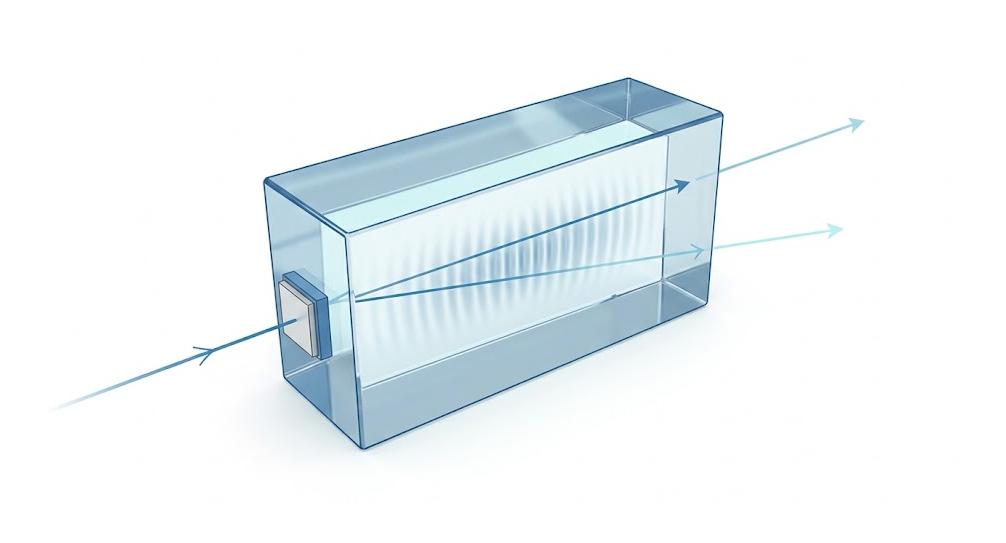
Acoustic Propagation Velocity and Interaction Material
When an RF signal is applied to the transducer, an acoustic wave is generated and travels through the crystal, creating a periodic variation in its refractive index. This acoustic grating modulates the diffraction of the laser beam and controls the optical loss within the laser cavity.
The acoustic propagation velocity determines how quickly the acoustic wave travels through the optical interaction region. Generally, a higher acoustic velocity allows the acoustic wave to travel across the interaction region more quickly, contributing to faster switching.
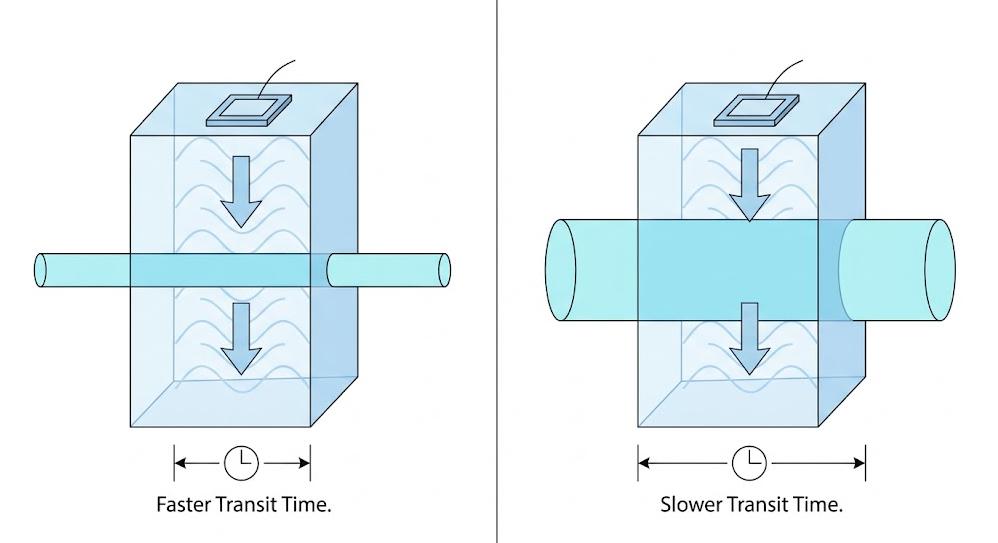
The relationship between beam diameter and acoustic transit time is also important when evaluating switching speed. Learn more about AOM rise time and beam diameter.
Different acousto-optic materials have different properties that influence switching performance, including:
- Acoustic propagation velocity: Affects the time required for the acoustic wave to travel through the interaction region.
- Optical transmission properties: Influence the amount of laser energy transmitted through the crystal.
- Thermal properties: Affect operating stability under different temperature conditions.
- Laser damage resistance: Determines the material’s ability to withstand high optical power densities.
For example, CQ-SMART’s 2.7 μm acousto-optic Q-switch series uses high-quality fused quartz with an anti-reflection coating to reduce insertion loss and provide reliable performance under high laser power conditions.
Therefore, material selection should consider acoustic properties, optical characteristics, and the requirements of the target laser application.
Acoustic Transducer Response and Design
The acoustic transducer converts the electrical RF signal into acoustic waves within the crystal. Its response characteristics affect how quickly the acoustic field is established and decays.
Several factors influence transducer performance:
- Electrode geometry: Affects electrical-to-acoustic conversion efficiency.
- Piezoelectric properties: Influence the efficiency of acoustic wave generation.
- Acoustic coupling: Determines how efficiently acoustic energy is transferred into the crystal.
- Impedance matching: Helps minimize unwanted electrical signal reflections and improve power transfer.
An efficient transducer should generate acoustic waves effectively while minimizing unwanted reflections and excessive ringing. These characteristics help achieve faster and more stable optical switching. For additional information about acousto-optic Q-switch performance and specifications, see our technical FAQs on acousto-optic Q-switches.
RF Driver Rise Time and Signal Control
The RF driver controls the electrical signal supplied to the AO Q-switch. Its rise time, fall time, bandwidth, and output stability all contribute to the overall switching performance.
When the RF signal is switched on, sufficient RF power must be delivered to establish the acoustic wave and achieve the required diffraction efficiency. When the signal is switched off, the acoustic field begins to decay, allowing the laser beam to return to its original transmission path.
Electrical response time and optical switching time are not the same.
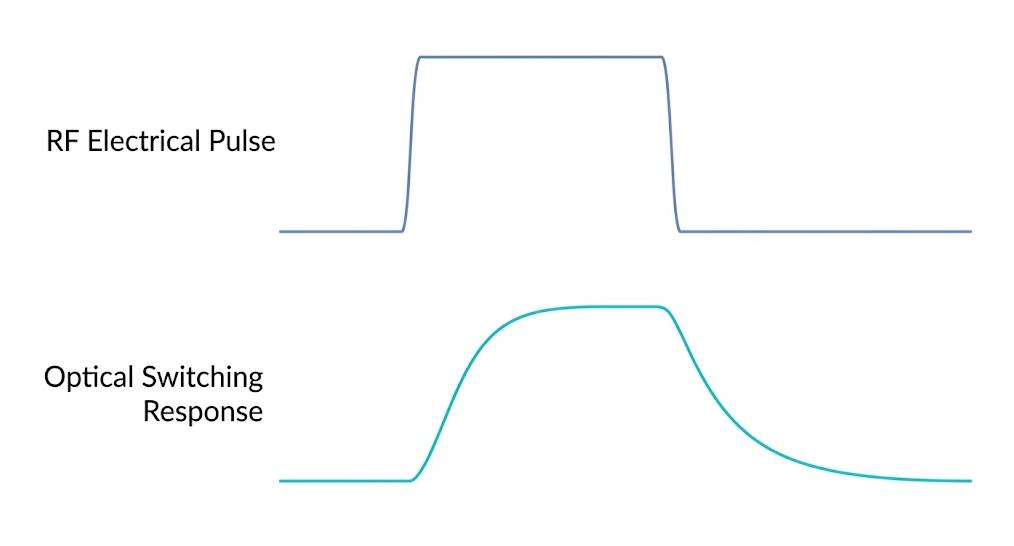
CQ-SMART’s RF driver specifications provide a practical example:
| RF Driver | Rising and Falling Time |
| V-type RF Driver | <60 ns |
| W-type RF Driver | <100 ns |
These values describe the electrical RF output transition, not the complete optical response time of the Q-switch. Acoustic propagation, transducer characteristics, and device design also contribute to the final optical switching time.
It is also important to note that higher RF power does not necessarily mean faster switching. RF power primarily affects acoustic wave amplitude and diffraction efficiency, while the driver’s dynamic response determines how quickly the electrical signal changes.
Therefore, the RF driver should be properly matched to the AO Q-switch to achieve the required switching performance. SMART provides different RF driver options for AO Q-switch applications, including the V-type RF driver and W-type RF driver.
Optical and Acoustic Interaction Geometry
Optical and acoustic interaction geometry determines how the laser beam interacts with the acoustic wave inside the crystal. This arrangement influences the effective switching response and diffraction efficiency.
Several factors should be considered:
- Acoustic path length: Determines the distance the acoustic wave must travel through the optical interaction region.
- Optical interaction region: Influences how quickly the acoustic field covers the effective cross-sectional area of the laser beam.
- Crystal aperture: Must accommodate the laser beam while meeting the optical requirements of the system.
- Bragg diffraction alignment: Proper alignment between the optical beam and acoustic wave is essential for efficient diffraction.
Therefore, the optical system and acoustic field should be designed to work together. Appropriate interaction geometry helps balance switching speed, diffraction efficiency, and overall laser performance. When selecting a Q-switch, beam diameter, optical aperture, and RF driver compatibility should also be considered. Read our guide on how to choose the right Q-switch for a laser.
How to Optimize the Switching Speed of an Acousto-Optic Q-Switch
Achieving fast switching requires a system-level approach rather than simply increasing RF power or changing a single parameter.
Engineers should consider the following factors:
| Optimization Factor | Key Consideration |
| Material selection | Acoustic velocity and optical properties |
| Transducer design | Efficient acoustic generation and coupling |
| RF driver | Bandwidth, output power, and rise/fall time |
| Interaction geometry | Acoustic path length and optical alignment |
| Thermal management | Stable operating temperature and cooling |
When selecting an AO Q-switch, the following specifications should also be evaluated:
- Operating wavelength: Must match the laser system.
- Optical aperture: Should accommodate the laser beam.
- Diffraction efficiency: Determines the effectiveness of optical beam modulation.
- RF drive power: Must meet the requirements of the AO Q-switch.
- Cooling configuration: Helps maintain stable operating conditions.
CQ-SMART offers acousto-optic Q-switches for 10.6 μm, 2.7 μm, and 2 μm laser systems, with different configurations designed for specific application requirements. Explore our acousto-optic Q-switch product range to compare available models and find a suitable solution for your laser system.
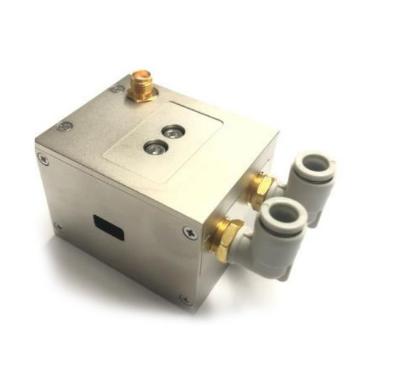
Evaluating these parameters together helps ensure that the selected device meets the actual operating conditions of the laser system.
Conclusion
The switching speed of an AO Q-switch is determined by the combined effects of acoustic propagation, transducer characteristics, RF signal control, and optical interaction geometry.
No single specification can fully characterize the dynamic performance of the device. By understanding and optimizing these interconnected factors, engineers can select and integrate a suitable AO Q-switch to achieve fast, reliable, and stable laser switching performance.