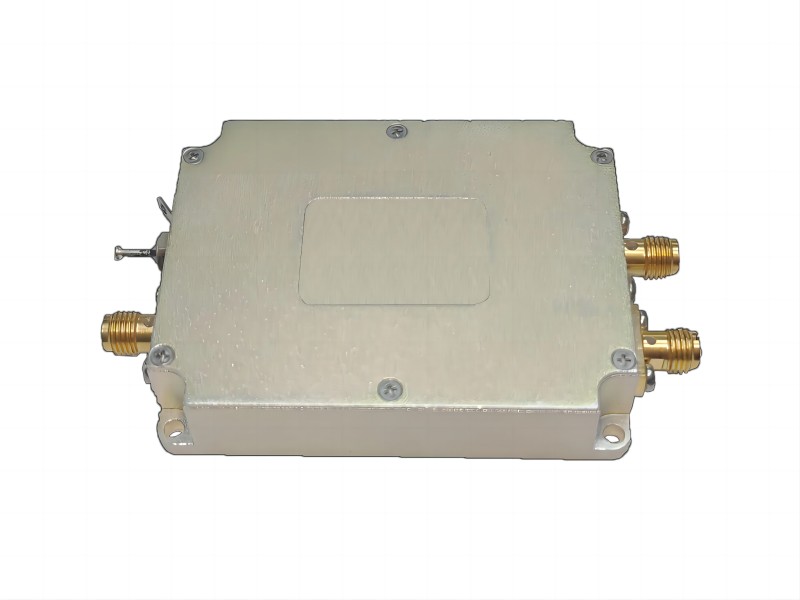
High-Frequency vs. Low-Frequency AOM Drivers: Pros and Cons
When incorporating an AOM into your optical system, one of the very first and often critical decisions you will make is in the operating frequency of the aom driver. This single number defines many aspects of both the core capabilities and limitations of your modulation system, including switching speed, beam quality, thermal load, and overall cost.
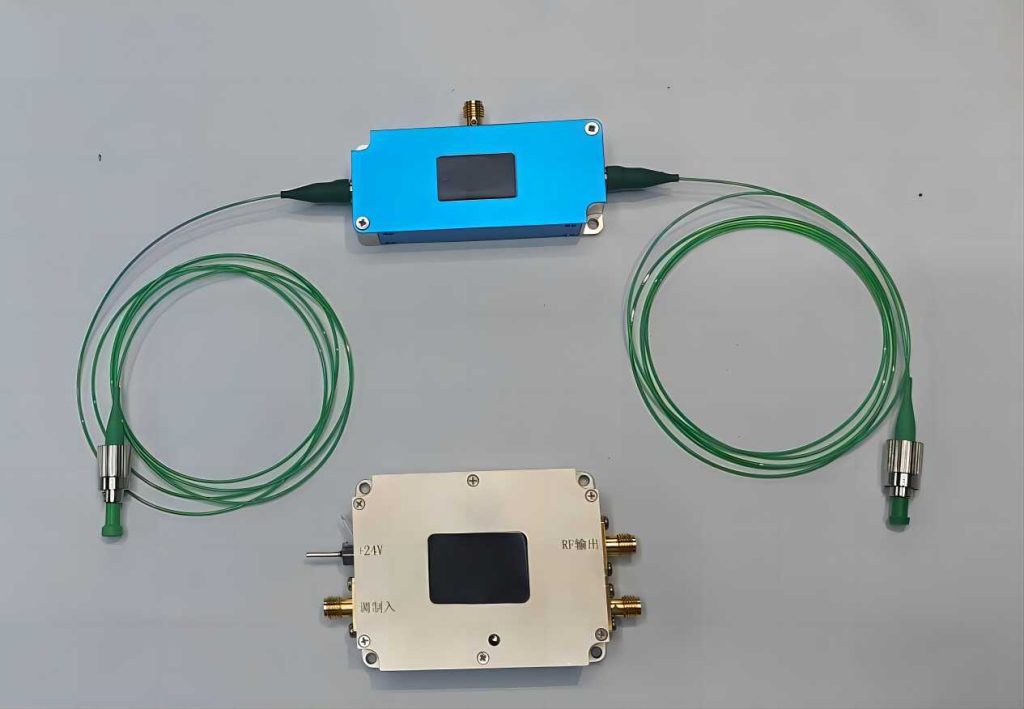
There is no universally “better” choice between high-frequency and low-frequency AOM drivers; instead, it is about matching certain technical characteristics to the unique demands of your application. A mismatch may lead to underwhelming performance, integration headaches, or unnecessary expense.
This tutorial breaks down the principles, advantages, and trade-offs of both paths.
Understanding AOM Driver Frequency: Core Principles and System Impact
Selection of the proper Acousto-Optic Modulator(AOM) driver frequency is a basic decision in the design of laser systems and directly determines the limitations of the core performance of the system. To make an educated technical choice, it is first necessary to understand the underlying physics.
In other words, the driver frequency in an AOM is the RF signal, which is generated by driver electronics and fed to the piezoelectric transducer bonded to the acousto-optic crystal. This RF signal excites a corresponding ultrasonic wave (standing or traveling) inside the crystal, developing a dynamic “phase grating.” When a laser beam passes through such a grating, Bragg diffraction takes place. The deflection angle, frequency shift, and modulation bandwidth of the diffracted light are all directly proportional to the driver frequency.
Therefore, driver frequency is not an independent parameter; it controls the physical features of the entire acousto-optic modulation system. Generally speaking, high driver frequency implies:
- A larger beam deflection angle, which is advantageous for spatial filtering in the optical path.
- A larger laser frequency shift, suitable for precision spectroscopy such as heterodyne detection or Brillouin scattering.
- A wider modulation bandwidth, theoretically supporting faster laser switching speeds.
However, this performance increase comes with its engineering trade-offs, mainly on diffraction efficiency and thermal management. At higher frequencies, the acoustic wavelength is shorter, and the interaction region is a finite optimum window. Poor matching in design leads to poor utilization of driver power, with excessive heat generated. This is why, in practical selection, one cannot simply assume “higher frequency is better.”
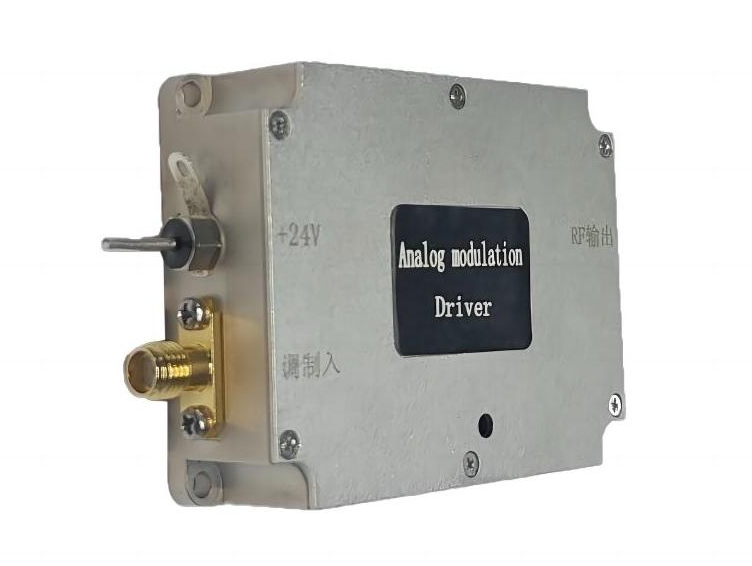
High-Frequency AOM Drivers: Key Features and Applications
High-frequency AOM drivers, operating typically from 80 MHz up to 200 MHz or higher, are designed for applications that require fast responses and precise modulation control. These drivers generate shorter acoustic wavelengths in the acousto-optic crystal, enabling much faster switching speeds and better temporal resolution, hence making them a choice for advanced optical systems.
Key Features of High-Frequency AOM Drivers
Rapid modulation and fast rise times
One of the main advantages of a high-frequency AOM driver is the possibility of providing high-speed laser modulation. The short acoustic transit time allows for microsecond or even sub-microsecond switching, which is crucial for modern scientific and telecom applications.
High precision, with steady performance
Smaller diffraction angles are produced by high-frequency operation, which in turn yields smooth beam steering and a more stable output. The latter is especially welcome in set-ups requiring accurate pulse shaping or fine intensity control.
Improved compatibility with short-wavelength lasers
Most research and photonic systems that work in the visible or near-infrared range require high-frequency AOM drivers to keep the diffraction efficiency at optimum while maintaining clean beam profiles.
Designed for advanced laboratory environments
These drivers are built for scenarios where system stability, low phase noise, and excellent RF linearity are required. High-frequency models often come with features like digital control interfaces or programmable modulation modes that meet the rigorous demands of research applications.
Typical Applications
High frequency AOM drivers are commonly found in:
- Ultrafast and mode-locked laser laboratories with applications requiring precise pulse picking or shaping.
- Optical communication testbeds in which stable, high-speed modulation is required.
- Laser scanning and imaging systems, including high-resolution microscopy
- Quantum optics, atomic physics and photonics experiments
- Frequency-shifting setups requiring reliable RF output over wide bandwidths
This high-frequency AOM driver presently represents the best performance to be had for customers needing speed, precision, and tight control in their laser modulation processes. However, such a level of performance usually entails higher technical requirements and system costs.
Low-Frequency AOM Drivers: Benefits and Typical Use Cases
Low frequency AOM drivers (typically 40-200 MHz) favor high power handling over maximum speed.
Their design provides superior diffraction efficiency, converting more laser power per watt of RF input-a critical advantage for high-power laser systems where energy efficiency directly affects operating costs. This inherent efficiency also simplifies thermal management in AOM systems, often enabling passive cooling solutions that enhance reliability for continuous industrial operation.
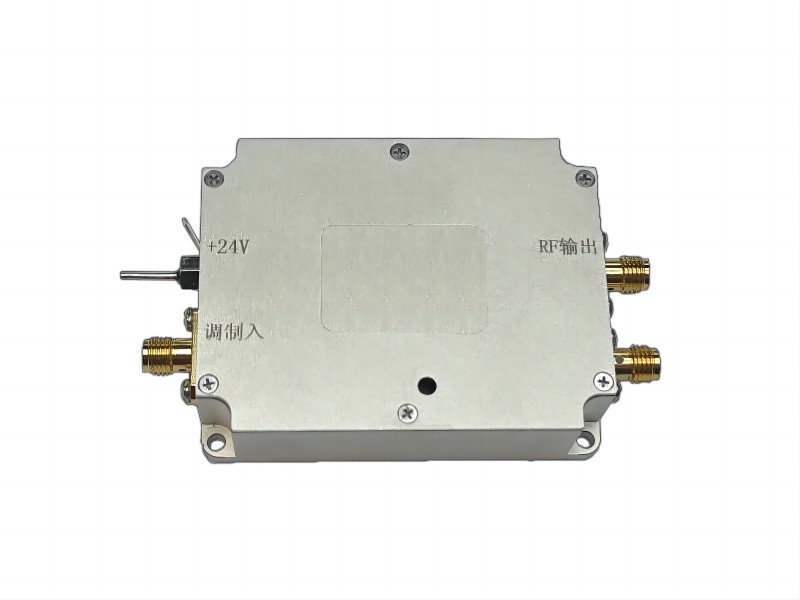
These drivers provide practical benefits besides being efficient. The matured electronic components they use ensure easy integration, lower cost, and reliable performance against beam condition changes. This set of optical efficiency, thermal simplicity, and design robustness makes them particularly suited for applications where reliable power handling is more essential than ultra-fast modulation.
Typical applications include, but are not limited to:
- Industrial Laser Systems: Material processing applications, including marking, engraving, and welding, where high average power handling and continuous operation reliability are paramount.
- Laser Projection and Display: High-brightness systems require stable, efficient modulation across the RGB channels with minimum thermal drift.
- Scientific Instrumentation: Power stabilization and amplitude control in spectroscopic systems and medical laser applications
- Fundamental Research Setups: Cost-effectiveness and ease of integration are more important than extreme performance requirements in development and educational settings.
Low-frequency AOM drivers often emerge as the best technical solution when system requirements emphasize power efficiency, thermal stability, and total cost of ownership. A robust design philosophy ensures consistent performance in demanding environments.
High-Frequency vs. Low-Frequency AOM Drivers
When deciding between a high-frequency and low-frequency AOM driver, each parameter’s impact on system performance, integration requirements, and its long-term behavior has to be carefully weighed against the others.
While operating for the same fundamental purpose, the delivery of RF power to control an acousto-optic modulator, their operating characteristics are very different.
The table below summarizes these key differences:
| Performance Factor | High-Frequency AOM Driver | Low-Frequency AOM Driver |
| Modulation Speed | Very fast; suited for high-speed and precision modulation | Moderate; adequate for standard or slower modulation tasks |
| Rise/Fall Time | Shorter; ideal for time-sensitive laser applications | Longer; less suited for ultrafast switching |
| Beam Quality / Diffraction Angle | Smaller diffraction angle, improved beam control | Larger diffraction angle, may require additional alignment |
| RF Power Handling | Typically lower due to higher RF frequency | Often higher, suitable for high-power laser systems |
| Thermal Management | Requires efficient cooling to maintain stability | Generates less heat; simpler cooling requirements |
| System Integration | More complex; demands precise alignment and compatible components | Easier integration for OEM and industrial systems |
| Cost Level | Generally higher due to design complexity | More cost-effective and suitable for volume production |
| Best Fit | Research labs, telecom, high-speed modulation environments | Industrial manufacturing, commercial lasers, budget-sensitive applications |
This comparison highlights a clear trade-off: high-frequency AOM drivers offer superior modulation performance and accuracy, while low-frequency AOM drivers excel in robustness, power handling capability, and cost-effectiveness. The final choice depends on whether your application prioritizes speed and accuracy or long-term stability and operating costs.
Which One to Choose? Application-Based Decision Guide

The choice between high-frequency and low-frequency AOM drivers depends on a clear analysis of your primary performance constraints. This decision is less about finding the best driver in absolute terms and more about matching its core strengths to your application’s non-negotiable demands. The following framework can guide you toward the optimal choice.
Prioritize a high-frequency driver if:
Your project involves speed and precision. Key determinants relate to the need for nanosecond-scale modulation, ultrafast laser systems, or high-speed imaging applications, where minimizing timing jitter is crucial. This route will also be indispensable when your optical design requires superior spatial filtering to isolate weak signals, such as in low-light microscopy or coherent detection experiments.
Choose a Low-Frequency Driver if:
Your system is based on power and robustness. This is the case when you modulate high-power lasers in the watt to kilowatt range where maximum optical throughput is required. It is the preferred solution for industrial and medical systems that demand continuous, reliable operation and projects where thermal simplicity, lower cost, and ease of integration are decisive factors.
Ultimately, start by quantifying your needs: What is your required modulation bandwidth, laser power and signal-to-noise target? The answers will clearly point toward the frequency domain that provides the right foundation for a stable, high-performance system.
Final
In the end, a choice between a high-frequency AOM driver and a low-frequency AOM driver comes down to a detailed knowledge of system requirements related to speed, precision, thermal performance, budget, and long-term reliability. Both types are very important for scientific, industrial, and commercial laser applications. Based on the particular needs of your project, you can select an AOM driver in such a way that it ensures high modulation performance, stability, and cost-effectiveness.
For questions on choosing the appropriate AOM driver for your laser system or for any high-quality driver solution, please do not hesitate to contact us for technical support or detailed product specifications!