
How to Reduce Insertion Loss When Integrating a Fiber AOM?
Insertion loss is often one of the first issues that engineers come across when they are integrating a fiber-acoustic-optic-modulator (AOM) into a laser or optical system. The amount of loss could look justifiable on paper; however, after the installation of the fiber AOM, total system power can sometimes drop more than expected, and this drop can be several decibels.
In applications with stringent power budgets, like the case of fiber lasers, quantum optics, sensing, or interferometric systems, even a tiny increase in insertion loss can cause adverse effects on signal-to-noise ratio, long-term stability, and overall system performance.
In this article, you will find an explanation of the source of insertion loss, as well as the methods to practically reduce it in real-world fiber AOM systems.
What Causes Insertion Loss When Integrating a Fiber AOM
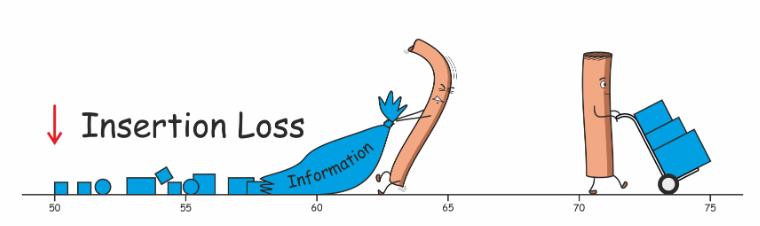
In a fiber AOM system, the insertion loss is seldom caused by only one source. Rather, it is the combination of the device itself and its integration in the fiber link that usually accounts for it.
- Every fiber acousto-optic modulator inherently comes with a certain amount of insertion loss due to the acousto-optic interaction. The input optical power that is not diffracted into the required output order will not be able to pass through, and this sets a baseline for the loss that cannot be removed.
- The fiber AOM and system fiber are often sources of additional loss due to the difference in modes. Variations in mode-field diameter or numerical aperture lead to loss of coupling efficiency, even if the splice is of good quality.
- Another reason of increasing the insertion loss is through the use of polarization effects, especially in non-PM fiber AOMs deployed in polarization-sensitive systems. The polarization state alterations lessen the effective diffraction efficiency.
- Finally, connectors, splices, fiber stress, and bend radius near the AOM package frequently add loss that is not reflected in datasheet specifications, but appears after integration.

How Fiber AOM Design Affects Insertion Loss
Insertion loss is profoundly affected by the design of a fiber acousto-optic modulator (AOM) right from the beginning, and integration quality will merely define how much loss will be experienced. However, a premium quality fiber AOM would always be the one with a lower and more predictable performance. It is the design choices on the manufacturing level that would mainly determine the future losses that could be avoided.
Here are some of the fiber AOM design factors that have a direct impact on insertion loss:
- Mode-field-matching, better matching the input/output fibers to the acoustic interaction area, thus minimizing the loss due to coupling
- Acoustic transducer effectiveness, which determines the degree of optical power diffraction with a specific RF drive level
- Internal splicing and alignment quality, which allows for a reduction of losses due to scattering and micro-bending inside the package
- Selection of fiber type, such as SM or PM fiber, for supporting a stable diffraction efficiency
- Trade-offs in design between low insertion loss and high extinction ratio
In practical terms, fiber AOMs that are designed for low insertion loss are more compatible with the system and require almost no compensation at the system-level. If you pick a fiber AOM that is designed for your specific wavelength, fiber type, and performance needs, then you would be cutting down the risk of inconsistent insertion losses over time.
Choosing the Right Fiber AOM to Minimize Insertion Loss
The selection of the appropriate fiber AOM is a key factor in maintaining low insertion loss and stable system performance. With the right device, the majority of the optical power is transferred through the AOM very efficiently, thus the need for subsequent adjustments or compensations is minimized.
Wavelength Compatibility
It is mandatory to choose a fiber AOM that is designed for the exact operating wavelength of your system. Just slight changes from the optimal wavelength can hurt diffraction efficiency, thereby causing an increase in insertion loss.
Fiber Type Matters
PM fiber AOMs keep the diffraction efficiency stable across the board when used in polarization-sensitive systems, whereas single-mode fiber AOMs could be enough for less demanding setups.
Bandwidth & RF Matching
Using the fiber AOM at an RF frequency close to its designed range definitely guarantees maximum diffraction efficiency and also eliminates optical loss.
Handling Power & Efficiency
Check if the fiber AOM can manage your optical power without thermal effects or loss of performance. The right matching of the AOM will lead to reduced loss and a longer lifespan of the system.
When you select a fiber AOM while considering these factors, you eliminate insertion loss at the outset and lay the groundwork for reliable, long-term performance of your system.
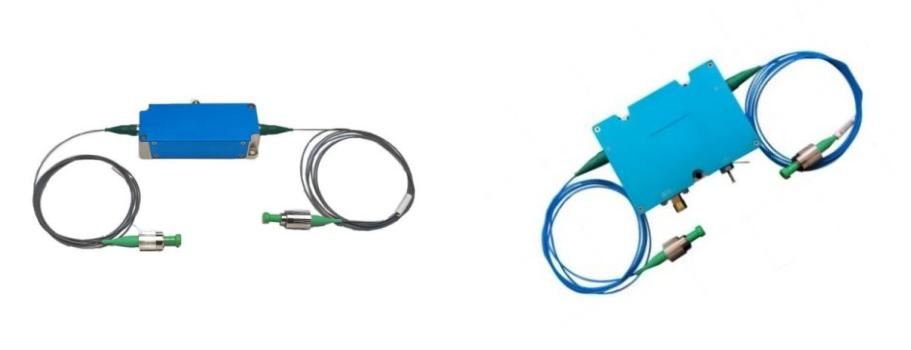
How Integration Quality Impacts Insertion Loss in Fiber AOM Systems
The most excellent fiber AOM designed can still have a higher insertion loss than expected if integration is not done correctly. The quality of the integration is a major factor in preventing high-loss performance and ensuring system stability for a long time.
- Connector and Splice Management: Loss and reflection are caused by each connector, and the fiber AOM is often fusion spliced to yield a lower total system loss and a higher AOM reliability.
- Fiber Routing and Bend Radius: Micro-bending and AOM’s tight looping can result in scattering and loss. Optical power is preserved through proper bend radius and less mechanical stress.
- Packaging and Alignment: The possibility of misalignment during integration is greatly reduced with pre-aligned and factory-packaged fiber AOMs, thus ensuring stable diffraction efficiency over the whole period.
To summarize, even a top-notch fiber AOM would not exceed its integration limits. By giving priority to careful fiber handling, alignment, and stress management, it is possible to keep insertion loss at a minimum level that is also predictable in actual systems.
Other Factors to Reduce Insertion Loss
In addition to the design and integration, there are several other factors that can have a major impact on fiber AOM insertion loss. Early identification of these factors will help not only to keep the system effective but also to cut down on the time taken for troubleshooting.
RF Drive Conditions Stabilization
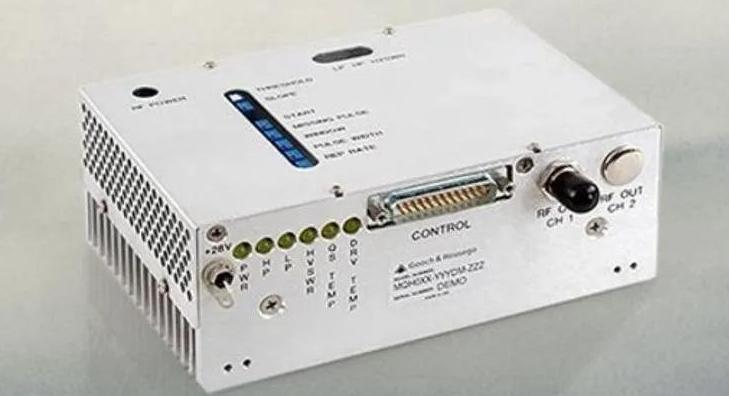
The RF drive is the main factor that determines the diffraction efficiency of a fiber AOM. If the RF power is not sufficient, then the diffraction efficiency is lowered, and thus the insertion loss looks even higher. On the other hand, if the RF power is too high, then there can be heating or long-term drift. By ensuring that the RF frequency is properly matched with the fiber AOM’s design and by making sure that there is good impedance matching, one can minimize reflections and hence maintain stable optical performance. An RF driver that has good reliability is important because it allows the fiber AOM to always work at its best and thereby keeps the insertion loss low throughout its life.
Preventing Errors by Customers
Common integration errors are the root cause of many insertion loss problems. The most frequent reason for these unrealistic expectations is assuming datasheet values correspond to the actual system performance. Using non-compatible fiber types, ignoring polarization effects in PM-sensitive systems, or improper fiber routing are all aspects that can add loss. Attention to proper fiber handling, polarization alignment, and RF setup at the beginning of the process will ensure that unnecessary performance degradation does not occur and that the fiber AOM does not suffer from avoidable stress.
Addressing RF stability and eliminating typical mistakes, engineers will not only reduce the insertion loss significantly but also maximize the performance of their fiber AOM systems.
When a Custom Low-Insertion-Loss Fiber AOM Makes Sense
Standard fiber AOMs might not be able to meet the rigorous insertion loss specifications in certain situations. A custom low-insertion-loss fiber AOM is often a solution that can benefit such applications as those with a very tight power budget, long-term stability requirement, or non-standard wavelengths.
The custom solutions provide the flexibility to optimize the fiber type, mode-field matching, acoustic transducer design, and packaging alignment according to the specific application. This will simultaneously reduce insertion loss, improve diffraction efficiency, and stabilize performance over time.
Although custom fiber AOMs might take slightly longer lead times, they are the ones to prevent expensive system redesigns or performance trade-offs. To ensure that the fiber AOM selected is the best in terms of both efficiency and reliability, start consulting an experienced supplier at the beginning of the project. A fiber AOM that is efficient and reliable will give predictable, low-loss performance in actual systems.
Fianl
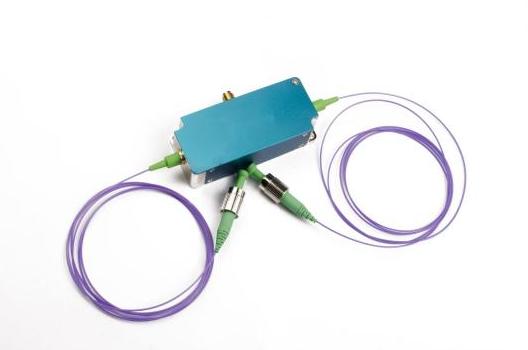
The process of reducing the insertion loss when integrating a fiber AOM comprises different aspects: design, integration quality, RF stability, and meticulous system planning, all of which one has to consider at the same time. An aspect-to-aspect basis, the very basic Assumptions of the AOM operation and every method of handling fiber from the mode-field matching and polarization management to proper fiber handling, all these contribute towards getting low-loss and high-efficiency performance.
The range of high-performance fiber AOMs from SMART SCI&TECH, along with the standard and customized solutions across 461 nm, 532 nm, 780 nm, 1064 nm, 1550 nm, and a high-power fiber AOM series, is a great choice for those applications where every single decibel counts. Our products are developed with a focus on low insertion loss, high stability of diffraction efficiency, and long-lasting reliability; integrated drivers are optionally available to make the integration of the system easier.
In case insertion loss reduction is very crucial for your system, don’t hesitate to reach out to our team and have a discussion on the AOM fiber solution that is best suited for you, and make sure that your laser or optical system is performing at its optimum!
Related Products
chnology becomes more common. In the future, AODs are synonymous with a scenario where rapid and precise scanning will be the norm, available, trustworthy, and covered by everyday technology.