How Fiber Acousto Optic Modulator Affects Signal Quality in Laser Systems?
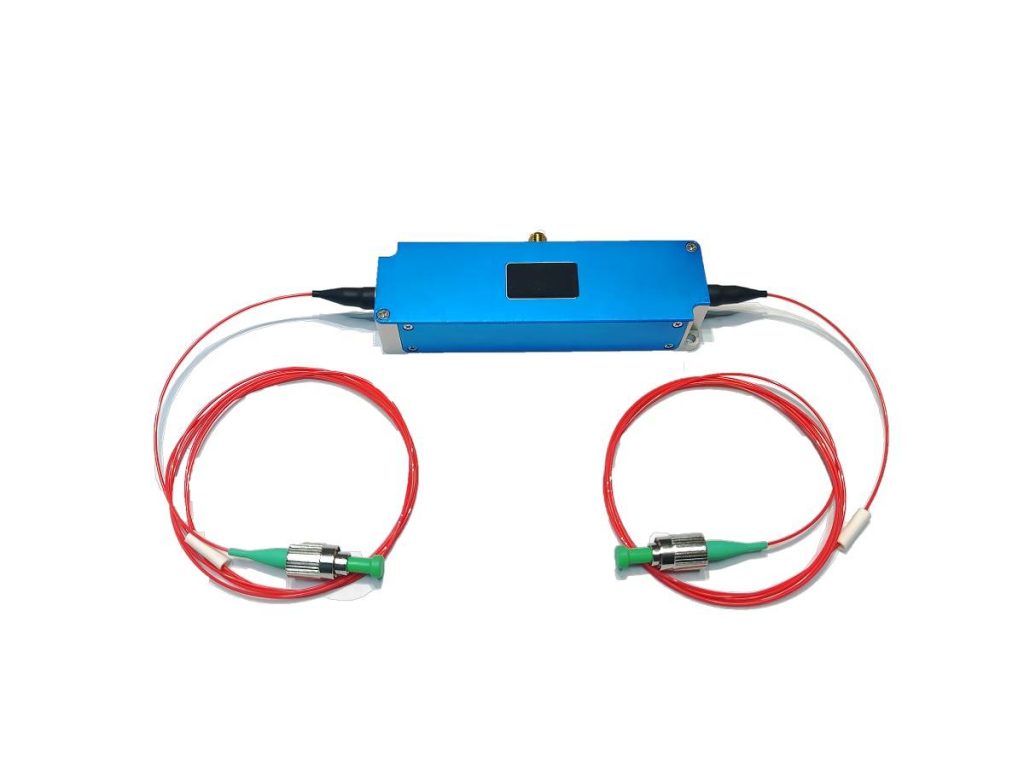
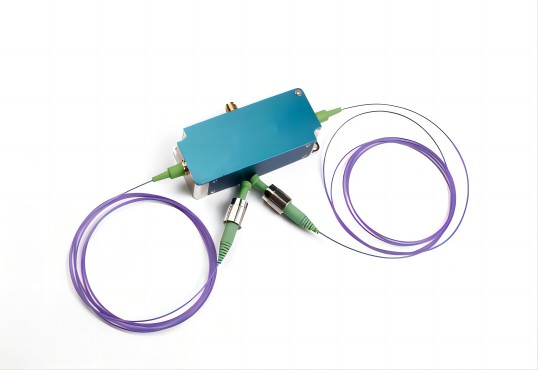
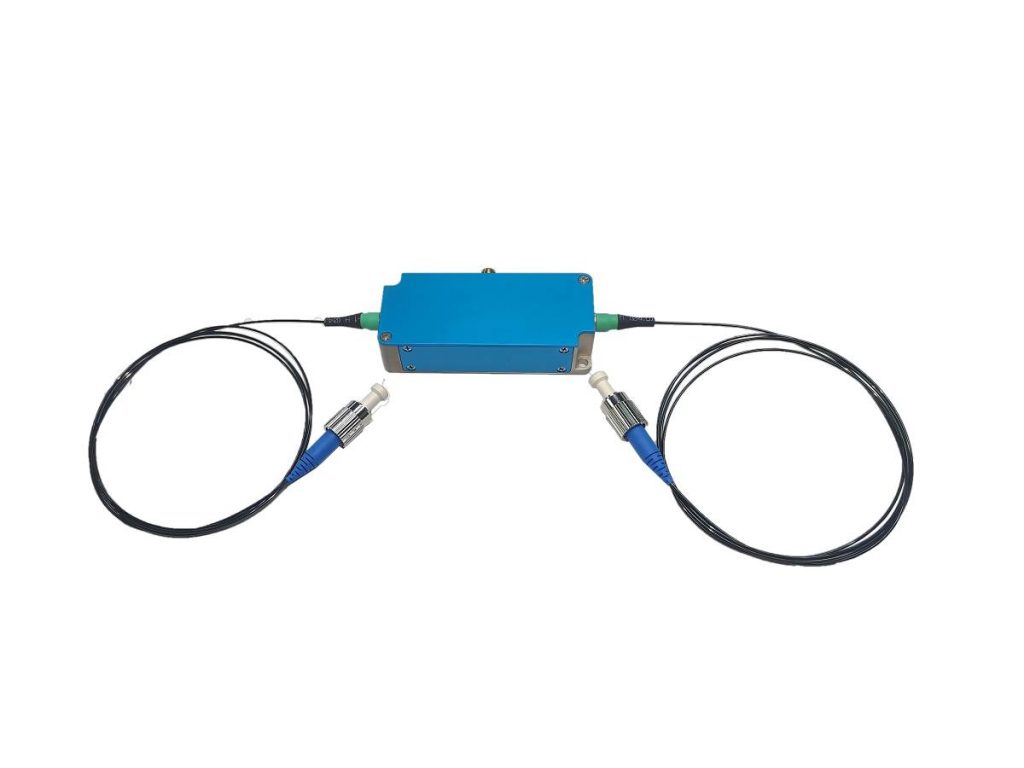
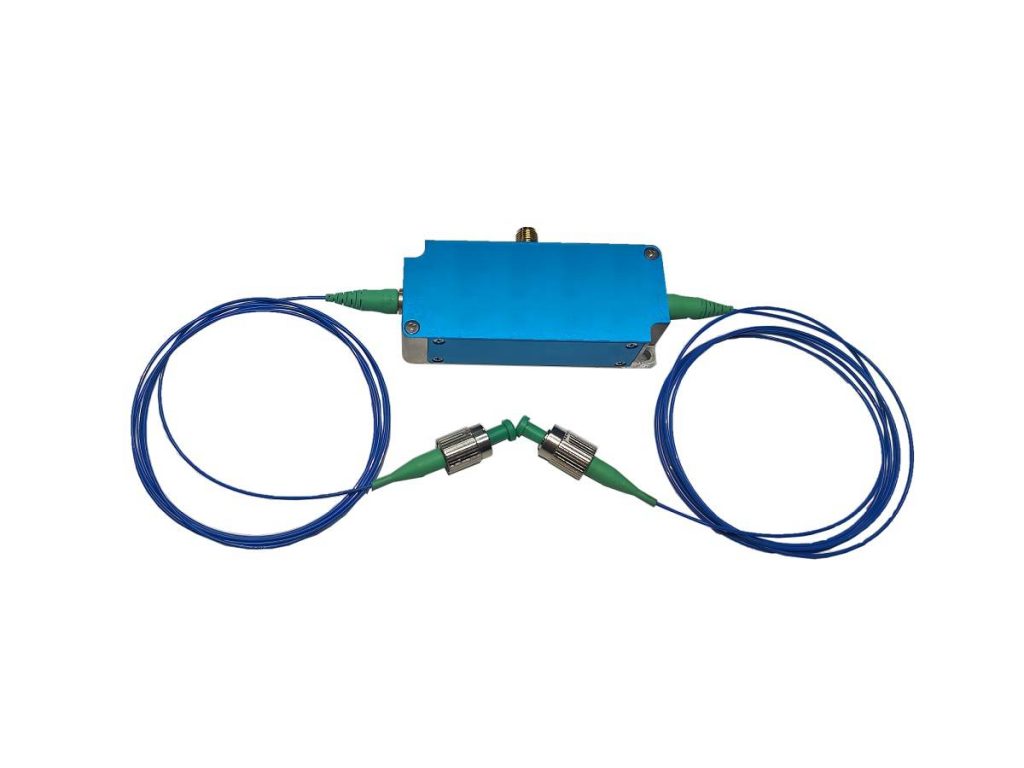
If you’re working with an integrating fiber Acousto Optic Modulator(AOM) in your laser system, you’re probably looking to get the most precise control over the operation – whether that means switching, pulsing, or even shifting the frequency of the light. However, the AOM is not an invisible switch. In fact, it’s an active device that directly impacts the final product. The AOM can make or break the quality of the signal in terms of stability, fidelity, and even efficiency.
Let’s get past the theory and talk about what really makes an impact.
The Real Impact of Diffraction Efficiency
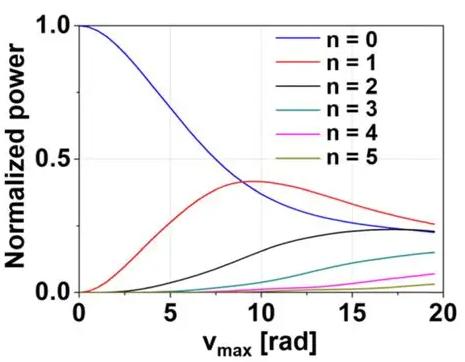
Diffraction efficiency can be thought of as the “throughput” of the AOM – the proportion of the input laser power that is delivered in the first-order beam. This, of course, is not 100 percent, and the important thing to understand is that a low diffraction efficiency does not simply mean a weak output beam – it means noise.
If the diffraction efficiency is not at its best, a large proportion of your input laser power remains in the zero-order beam. This can, in turn, re-enter your system and cause you problems as noise. More seriously, you may be forced to increase your input laser power to compensate for the loss, and this can cause problems with the crystal of the AOM, which can drift as a result of the heat generated, and this, in turn, can cause problems with the stability of your output power.
That’s why choosing a high-efficiency fiber optic modulator isn’t a luxury; it’s the first step toward a quiet, stable optical path.
Your RF Driver’s Hidden Influence
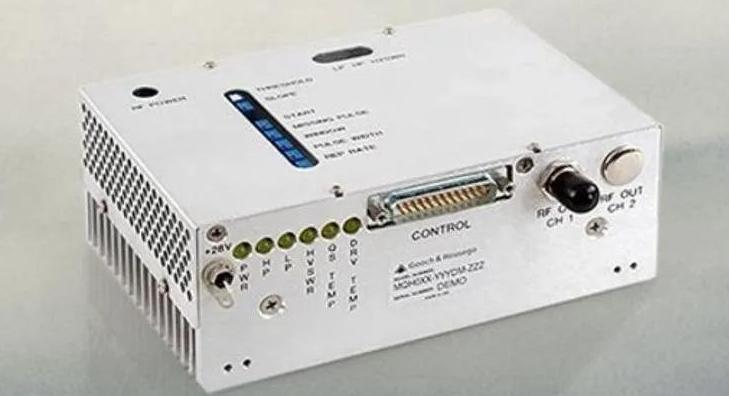
The quality of your fiber acousto-optic modulator is only as good as your RF driver signal. The RF driver is like your steering wheel. Any wobbles in your hands will be felt in your beam path.
Another thing that could go wrong is impedance mismatch. If your RF driver’s impedance doesn’t match your transducer’s impedance exactly, you will have reflections. This electrical echo causes ringing in your pulses. Instead of nice square pulses, you will have overshoot and a reduced extinction ratio. In certain applications, such as lidar or laser material processing, this means reduced accuracy.
In conclusion, your fiber acousto-optic modulator and driver must be designed as a unit. An out-of-the-box driver could negate your modulator’s design.
Where Pulse Fidelity Gets Lost?
If you use an fiber AOM for pulse picking, you are asking it to be a perfect shutter. Two physical limits will determine how well it can accomplish this task for you.
One limit is the rise and fall time, which is a speed limit for the modulator. If it is slow, your pulses will be rounded.
The other limit, which is often forgotten, is the acoustic transit time. Your laser beam has a width. It takes time for the acoustic wave to cross this width. If your electronic pulse is shorter than this time, your optical pulse will be sheared and will be broadened. To use an AOM for high-fidelity pulse shaping, you need one with a tightly focused acoustic wave.
| Observed Signal Issue | Likely Root Cause | Quick Diagnostic Check |
| Output power drifts over time | Thermal heating of the AOM crystal | Monitor optical power stability for 30 minutes after turn-on. |
| Pulse exhibits ringing or overshoot | RF driver impedance mismatch | Inspect the pulse shape using a fast photodetector and oscilloscope. |
| Beam pointing slowly wanders | Crystal heating causing thermal lensing | Observe beam spot position at a distance over an extended period. |
| Unable to achieve narrow pulses | Slow rise time or excessive acoustic aperture | Compare system requirements with the AOM’s specified minimum pulse width. |
The Thermal Drift You Can Feel
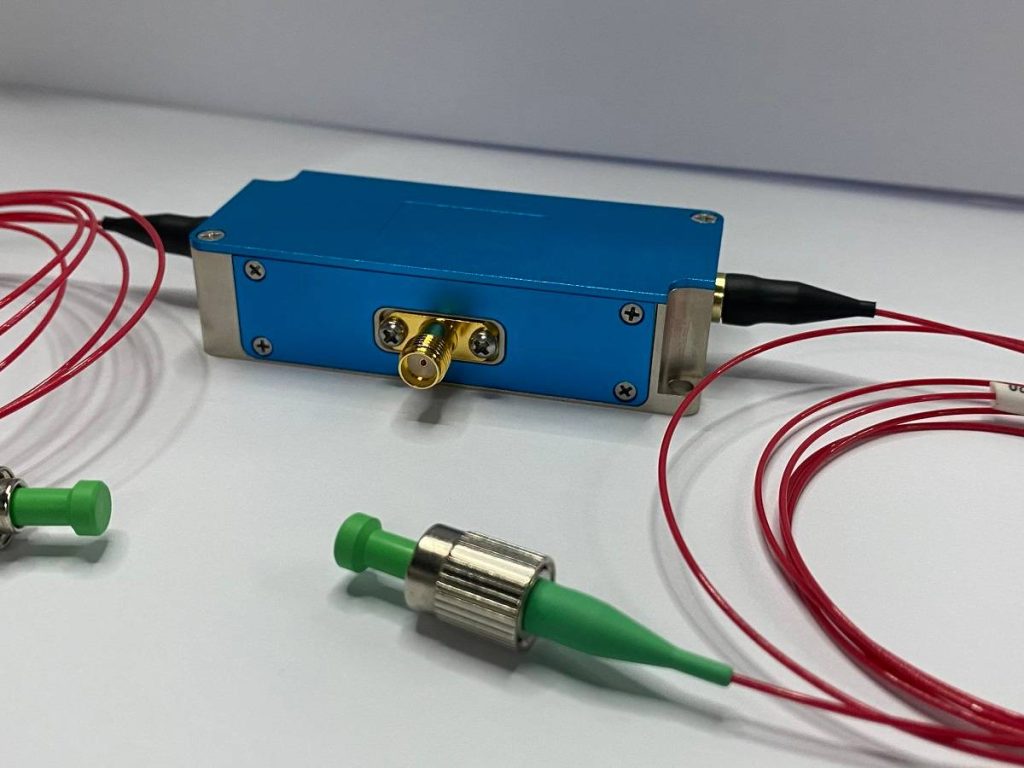
All fiber AOMs produce heat during operation. This is no flaw; it is physics in action! However, heat is one of the biggest saboteurs of signal quality.
As the temperature of the crystal increases, there are two effects: a change in refractive index (steering of the beam) and a change in acoustic velocity (change in diffraction conditions). This means that your carefully aligned beam now walks off into nowhere, and your diffraction efficiency suffers—a phenomenon known as thermal roll-off.
In lab settings, this means hours of readjustment. In an industrial setting, this means downtime! Thermal management is not an afterthought; it is an essential component for any laser system with an AOM.
Practical Steps for a Cleaner Signal
So, how do you select and use a fiber acousto-optic modulator to safeguard your signal integrity? Go beyond the peak spec and consider the following:
- Size the aperture to your beam. A too-large aperture will degrade your rise time and pulse integrity.
- Specify real-world performance. Ask for the efficiency versus RF power characteristic and the actual pulse response. These are more informative than a spec number.
- Consider the AOM and driver as a single entity. Buy them together from a vendor who characterizes them as a pair to eliminate impedance issues.
- Design for cooling from day one. For a high-performance application, consider an AOM with temperature control. It will set and hold performance from power-up.

At SMART SCI&TECH, we keep these signal integrity issues in mind when designing our fiber Acousto Optic Modulatos. We offer the complete characterization data and thermal solutions required to successfully integrate our modulators into your system, ensuring they improve, not degrade, the performance of your laser system.
Noticing signal integrity problems in your system? It may be time to consider your modulator. Let us know about your application, and we can provide a data-driven recommendation for a superior-performing AOM solution.