How to Stabilize an Ultra-Narrow Linewidth Laser for Fiber Sensing Applications
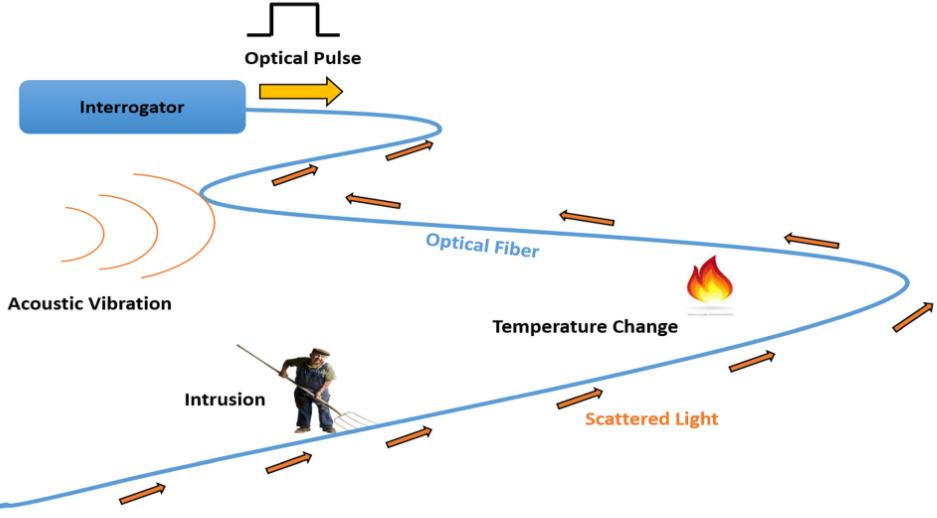
Fiber sensing technologies—such as distributed temperature/strain sensing, structural health monitoring, and seismic detection—are able to extract very small signal changes from optical fibers. Ultra-narrow line lasers are the central components of such systems and are prized for their long coherence length, low frequency noise, and high phase stability. Even the best lasers remain and will continue to be susceptible to environmental and electrical disturbances. With no stable light source, a fiber sensing system will steadily incur signal drift, noise, and unreliable measurements. This article will outline the importance of laser stability, the most common sources of laser instabilities, practical methods to address the issues, and the most important metrics to assess the methods.
Why Stability Matters for Ultra-Narrow Linewidth Laser in Fiber Sensing
The quality of the light source used in optical fiber systems relates directly to system performance. An ultra-narrow linewidth laser (typically <1 kHz linewidth) enables detection of minute phase shifts that occur due to strain, temperature, pressure, or vibrations in the fiber.
Stability is important for three reasons:
The fiber optic sensors measure phase changes, and laser frequency noise or phase drift will translate directly to a measurement error, which will reduce phase sensitivity.
A narrow-linewidth laser will result in a long coherence length. Any instability will shorten coherence and result in losing interference visibility, which will impact long-range sensing (tens to hundreds of kilometers).
For applications in energy pipelines or bridges, one of the fundamental requirements is consistent long-term performance. Instability leads to false alarms and poor repeatability.
To conclude, the system will not improve with the most sophisticated algorithms or high-resolution optics if there is a light source that is drifting or noisy. This is the performance limit of the system, defined by the stability of a laser with ultra-narrow linewidth.
Key Instability Sources Affecting Ultra Narrow Linewidth Laser
Even for an ultra-narrow linewidth laser engineered for outstanding spectral purity, it is highly sensitive to environmental perturbations. Determining the origins of instability is the beginning toward achieving reliable performance in a state-of-the-art fiber sensing system.
1) Temperature Variations
Temperature changes alter the refractive index and physical length of the laser cavity, leading to slow frequency drift. A minor fluctuation of just a few millikelvin could shift the emission frequency, especially in ultra-narrow linewidth designs with sub-kHz stability.
2) Mechanical Vibration and Acoustic Noise
Both nearby equipment and ambient acoustic noise may easily couple into the laser cavity, causing short-term frequency jitter. This is especially a problem in field-deployed or industrial sensing systems.
3) Optical Feedback
Reflected light re-entering the laser cavity upsets the oscillation mode due to the disturbance. This broadens the linewidth and introduces phase noise into the laser. Optical feedback is one of the most critical threats to the stability of any ultra-narrow linewidth laser.
4) Electrical and Current Noise
Fluctuations in the driving current or power supply directly translate into output frequency noise. Consequently, any fluctuations in the driving current or power supply directly result in output frequency noise.
5) Packaging stress and thermal expansion
Residual stress in the laser package, fiber pigtail, or mounting materials can induce slow frequency drift as temperature changes over time. Careful mechanical design and the use of low-expansion materials are critical to ensuring stability.
In practice, these factors often interact, with temperature drift amplifying feedback sensitivity, and vibration modulating current noise. A successful stabilization strategy must therefore address all these influences as an integrated system.
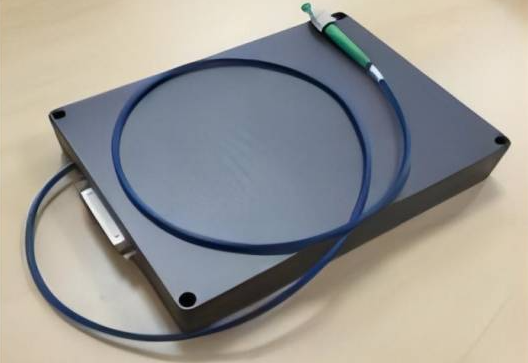
Practical Techniques to Stabilize an Ultra-Narrow Linewidth Laser
A two-tiered approach is needed to counter the key sources of instability-targeting appropriate, robust passive isolation to provide a stable foundation and sophisticated active control for fine-tuning.
1. Passive Isolation
It serves as the foundation that protects the laser against environmental perturbations.
- Precision Temperature Control: High-performance TECs should be used, axially mounted with a feedback loop. Stabilization of the laser diode and critical optics to within millikelvin (mK) levels directly serves to suppress long-term frequency drift.
- Rigid Packaging and Vibration Isolation: A stiff mechanical housing suppresses high-frequency noise. In the case of low-frequency vibrations, the laser head must be mounted on a passive or active isolation platform to minimize phase noise induced by mechanical disturbances.
- Optical Isolation: A high-performance optical isolator (>40 dB) at the laser output is indispensable. It provides a one-way valve that prevents the disruptions brought about by back-reflections from the system into the laser—the major cause of mode hopping and intensity noise.
2. Active Stabilization
When passive methods are not sufficient, active control electronics serve to lock the laser frequency to an ultra-stable reference.
The most successful approach is the Pound-Drever-Hall method. In the PDH method, the frequency of the laser is locked to an optical reference cavity that itself is very well isolated against temperature and vibration. The PDH technique generates a sensitive error signal that acts to correct the frequency of the laser in real time, bringing residual phase noise and drift down by orders of magnitude, and yielding the highest possible stability.
These principles may be combined in various passive and active methods, respectively, to turn an ultra-narrow linewidth laser from a delicate laboratory instrument into a robust and reliable engine for precision sensing.

Performance Metrics to Evaluate Ultra-Narrow Linewidth Laser Stability
Quantifying the stability of an ultra-narrow linewidth laser depends on a few critical metrics, which capture both its short-term coherence and its long-term reliability.
- The Lorentzian linewidth is the basic measure, representing the intrinsic short-term phase noise and defining the ultimate coherence length. However, a narrow Lorentzian linewidth itself is not sufficient.
- For long-term performance, frequency drift (measured in MHz/hour or day) indicates how much the laser’s central wavelength wanders over time, primarily due to thermal effects.
- The phase noise spectrum gives a complete view: it plots noise power versus frequency offset from the carrier. Lower noise at low offsets signifies better stability.
- Finally, Relative Intensity Noise(RIN) is monitored to make sure the optical power within the laser remains constant, because fluctuation in power can be mistaken for a signal in very sensitive applications.
Taken together, these metrics form a complete picture of laser stability.
Sum Up
A stable ultra-narrow linewidth laser is essential for high-performance fiber sensing. Temperature fluctuations, mechanical vibrations, optical feedback, electrical noise, and packaging stress all challenge frequency stability.
By combining precise thermal control, mechanical isolation, optical feedback suppression, low-noise current driving, and active frequency locking when needed, engineers can maintain consistent, low-noise output. This ensures accurate, repeatable measurements even in demanding environments.
Evaluating stability requires looking beyond linewidth alone. Metrics such as frequency drift, phase noise, RIN, SMSR, and coherence length together provide a clear picture of a laser’s performance.
Ultimately, careful stabilization and proper evaluation allow an ultra-narrow linewidth laser to deliver the precision, reliability, and long-term consistency that modern fiber sensing applications demand.
Have an interest in choosing an ultra-narrow linewidth laser for your needs? View our other blog: How to Choose the Right Narrow-Linewidth Laser?