Three Most Overlooked Parameters When Selecting High-Performance Fiber AOMs in 2026
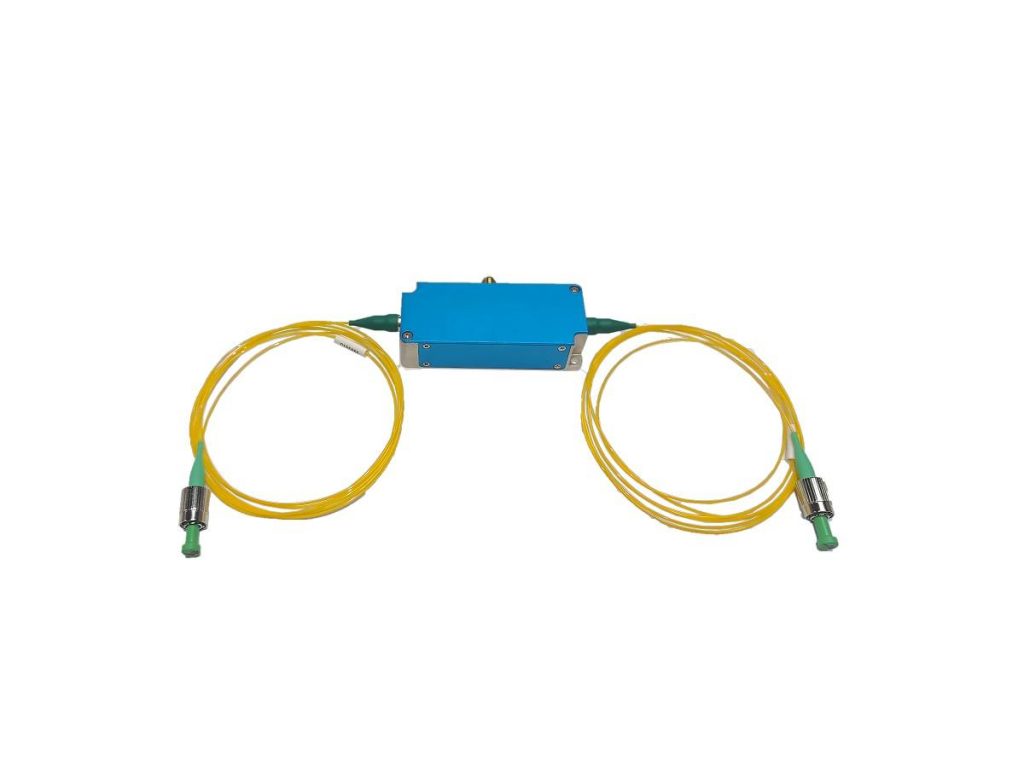
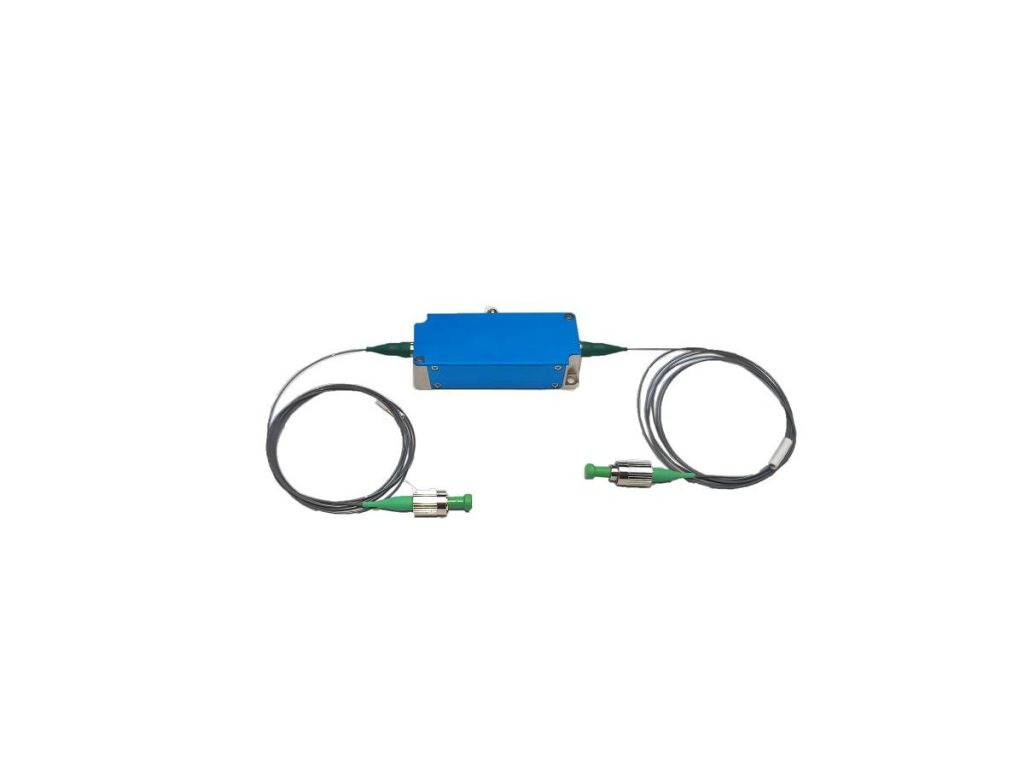
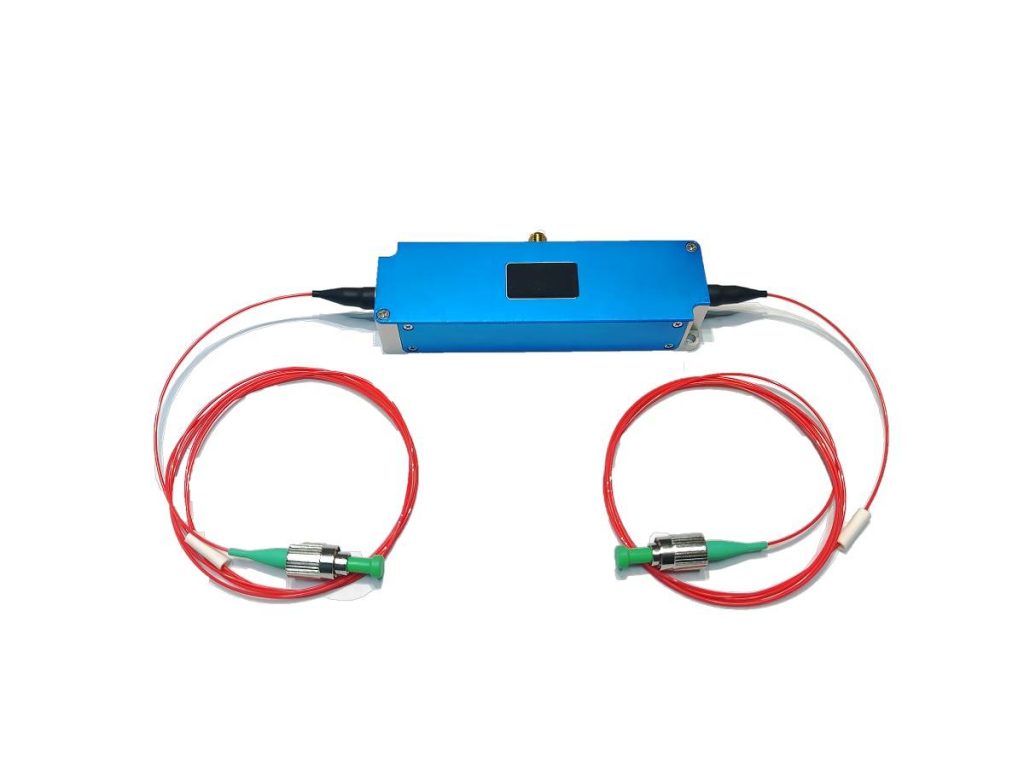
In 2026, a Fiber Acousto-Optic Modulator (Fiber AOM) is not a “set and forget” device. With industrial lasers being pushed to kilowatt-level peak powers and quantum networking requiring sub-nanosecond-level synchronization, a datasheet that only provides wavelength and frequency is not enough.
A common problem that many engineers know all too well is a Fiber AOM that passes all of its main specifications but causes instability or mode-hopping in a system. To prevent these common bottlenecks in integration, you must consider three technical parameters that are often not provided or are buried in small print.
Parameter 1: Thermal Frequency Drift & Long-term Phase Stability
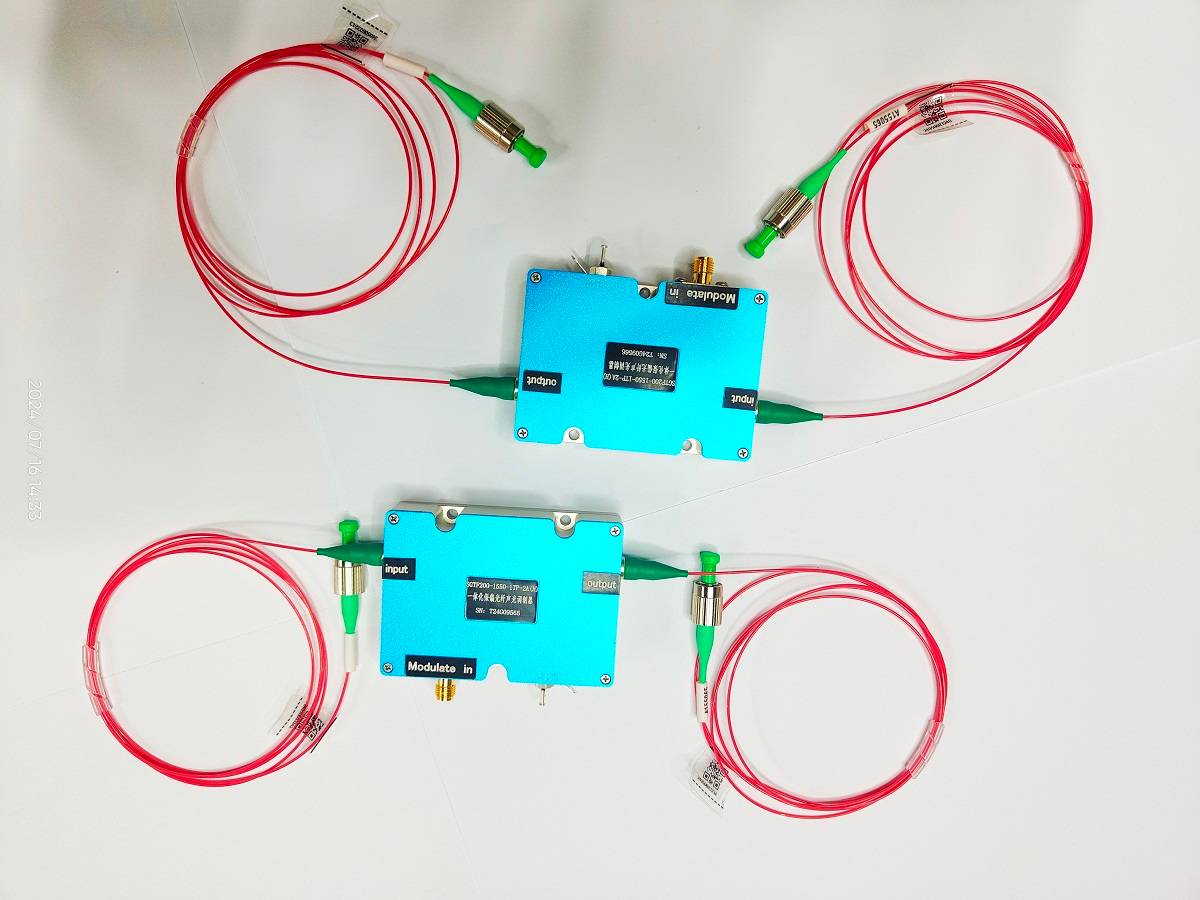
In 2026, with fiber lasers striving to increase average powers and pulse control, thermal management of the AOM crystal is no longer a “nice-to-have” feature. When an RF signal is applied to the transducer, not all of it is converted to sound. “A large fraction of it is converted to heat.”
The heat affects the refractive index of the crystal (dn/dT) and acoustic velocity (Va), and as the frequency shift is related to acoustic wavelength, thermal effects produce “frequency walking.”
In Quantum Sensing: Even a millikelvin change can de-phase a trapped-ion clock.
In a LiDAR system, Frequency drift is directly converted to a distance error in an FMCW system.
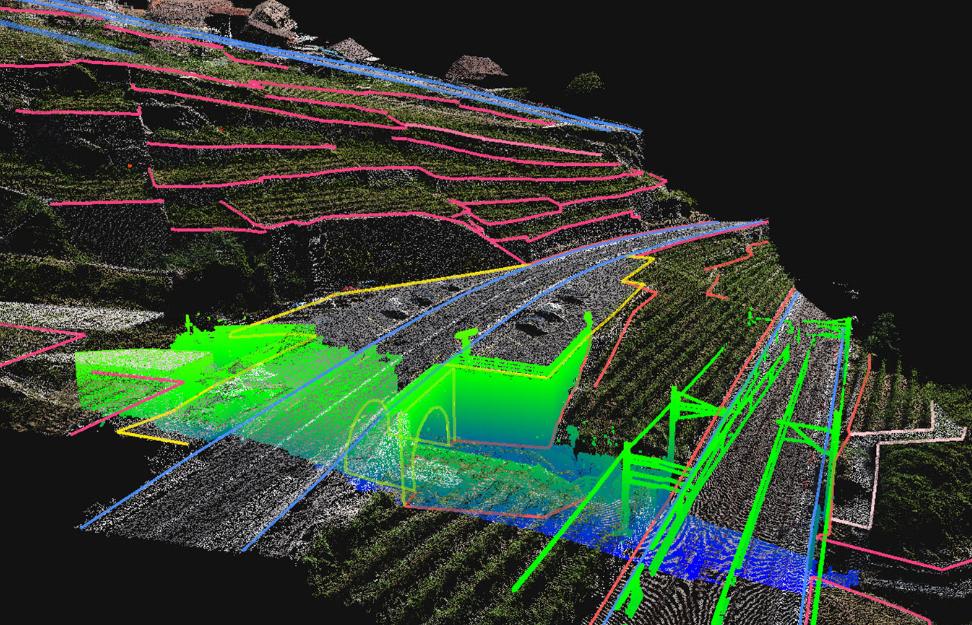
Evaluation Metric: Frequency Stability vs. Duty Cycle
In evaluating a High-Performance Fiber AOM, a supplier should be asked to provide data on frequency stability over a 24-hour continuous-wave (CW) load. An optimal AOM should have a heat sink design that maintains a temperature gradient inside the AOM, ensuring a constant diffraction angle regardless of input power.
Parameter 2: Polarization Extinction Ratio (PER) Under Stress
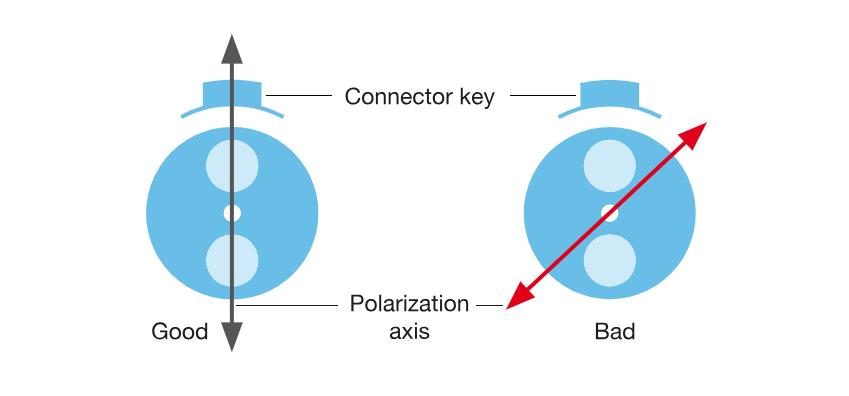
Most suppliers quote a Polarization Extinction Ratio (PER) of 20 dB or greater, but this is typically measured under ideal, static conditions in the factory. Real-world requirements for 2026 are actually Dynamic PER.
As AOMs are integrated into compact, vibration-prone systems such as drones or medical carts, the stress on the Pigtails (fiber leads) increases. If the internal fiber alignment or epoxy bonding at the crystal interface is suboptimal, mechanical stress can cause rotation of the polarization state.
Why it Matters
For pulse picking in ultrafast lasers, a decrease in PER means:
- Ghost Pulses: Leaked light can damage the workpiece or destabilize the seed laser.
- Signal Noise: Higher Background-to-Noise ratio in heterodyne detection.
Selection Tip: Consider AOMs that use stress-induced birefringence management for coupling between the fiber and crystal. The ultimate high-end AOM will maintain PER even with fiber leads coiled at the minimum bend radius.
Parameter 3: Rise Time vs. Diffraction Efficiency Trade-off
The race for speed in 2026 often causes engineers to request the shortest Rise Time (Tr) possible. Unfortunately, physics imposes a cruel penalty: as you minimize the beam waist to achieve faster switching speed, you must accept reduced Diffraction Efficiency (DE) and potential optical damage as unwanted side effects.
Physics of “Sweet Spot”
The rise time is determined by how long it takes for the acoustic wave to cross over the optical beam. In order to achieve a 10 ns rise time, the beam must be focused tightly within the crystal of the AOM.
- The Risk: “High power density (MW/cm2) at the focal point can cause bulk damage or non-linear effects in the crystal.”
- The Efficiency Loss: “A smaller beam means fewer ‘acoustic planes.’ Your DE may drop from a healthy 85% to a mediocre 60%.”
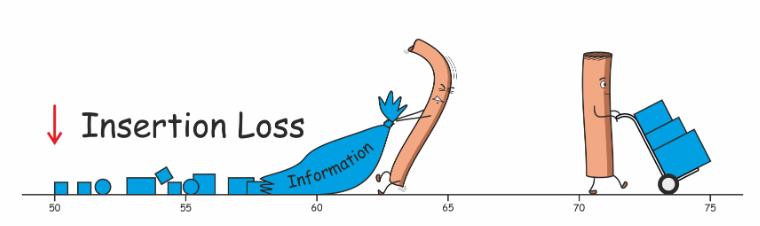
Rather than seeking out the fastest spec available in the marketplace, calculate your “timing budget.” If your application can tolerate a 25 ns rise time, opting for a larger beam waist will significantly improve your Insertion Loss (IL) and extend the modulator’s lifespan. In 2026, the most efficient systems will be those that maximize total throughput efficiency, not raw speed.
Why 2026 Supply Chains Favor Integrated Solutions?
This is exactly what is being seen in the 2026 photonics market, where the purchasing strategy has changed from buying individual components to requiring integrated sub-systems. The volatile supply chain has taught companies that a Fiber AOM is only as good as the RF driver powering it. If these two components are supplied from different sources, it means that the customer’s engineering team is left with the responsibility of impedance matching, thermal synchronizing, and EMI compliance.
Supply chains are now looking to the future and requiring “matched pairs” solutions. By using this integrated approach, companies can lower their Total Cost of Ownership (TCO).
SMART SCI & TECH is able to overcome this shift with pre-validated sets of AOM and driver available to ensure that the Voltage Standing Wave Ratio is optimized at the factory. There is no “finger-pointing” with vendors to troubleshoot issues, and your 2026 production schedule is on track regardless of any pressures on global logistics.
Why Choose SMART SCI & TECH?
For over 15 years, Chongqing Smart Science & Technology(SMART SCI & TECH) has led the industry in Acousto-Optic innovation. We don’t just deliver Acousto-Optic devices; we deliver high reliability Optical solutions with ISO 9001-certified manufacturing and rigorous R&D. Whether you are building out a new Quantum lab or deploying multiple 4D LiDAR systems, our team of engineers will work with you to ensure every Fiber AOM we ship is tailored to your unique power, speed, and stability demands.
Ready to optimize your Optical system for 2026?
Let us schedule a technical consultation and provide you with a customized quote for our integrated Fiber AOM and RF Driver solutions. We look forward to building the future of light with you!