
What Laser Linewidth Is Required for Coherent Optical Sensing?
The choice of an appropriate laser for a coherent optical sensor entails considerations beyond just choosing the right wavelength and power for the particular task. There is also the issue of laser linewidth, which will determine how coherent the optical signals are and, therefore, their sensitivity to minute changes in frequency/phase.
However, it should be noted that there is no general rule concerning linewidth for every coherent sensing operation. Various techniques such as distributed sensing using optical fiber, coherent LiDAR, interferometry, and Brillouin sensing work under varying conditions. Thus, it is up to the particular case that determines the laser linewidth.
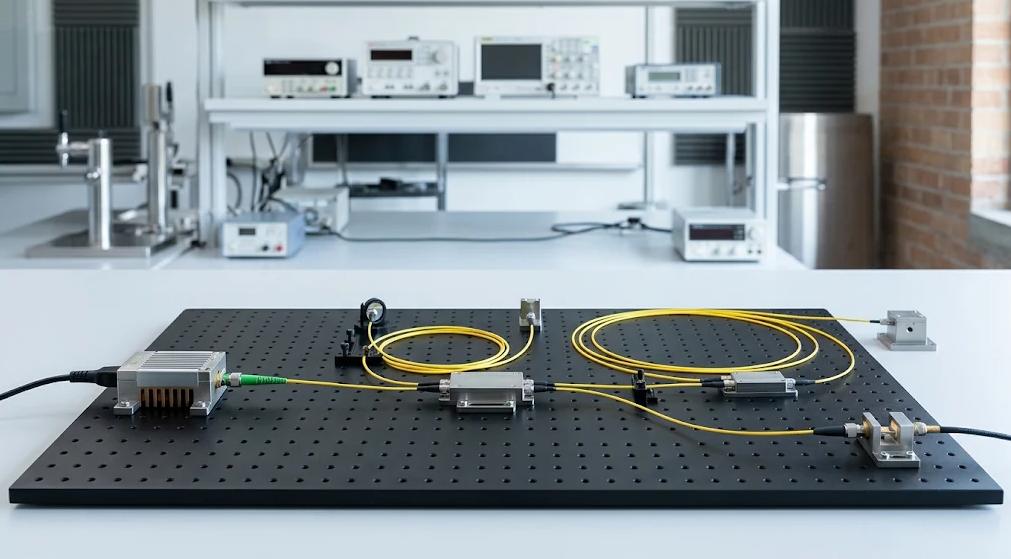
Why Does Laser Linewidth Matter in Coherent Optical Sensing?
Coherent optical sensing is based on the mutual interaction of the optical signals used in order to retrieve the information related to distance, vibration, strain, displacement, and others. For this purpose, it is necessary to achieve enough coherence in the laser for the optical signals involved in the sensing process.
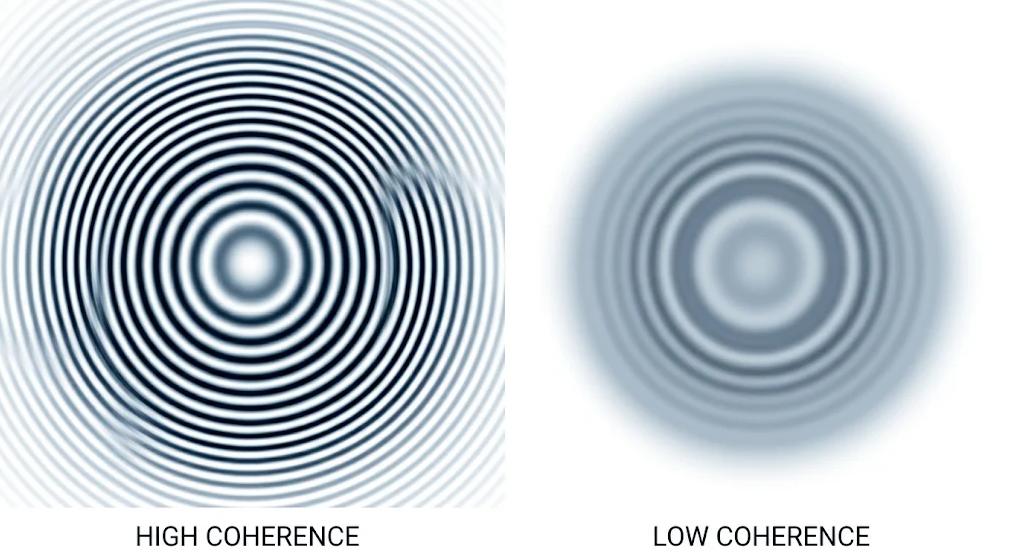
Laser linewidth refers to the bandwidth of the light generated by the device. Narrower laser linewidth results in higher laser coherence time and coherence length, meaning that the laser phase relation is more stable in time or optical path difference.
When optical path difference grows, the time shift between reference and measured signals also increases. It means that the coherence of the laser has to be enough in order to allow measuring this phase change.
Such a problem becomes more pronounced in the case of measuring small phase shifts. Even when the optical power is sufficient, inadequate laser coherence can reduce interference visibility and make phase measurements less reliable.
Laser Linewidth Requirements for Different Sensing Applications
Each type of coherent optical sensor imposes unique requirements for the laser used in the system. One should not use one criterion to assess linewidth irrespective of measurement technique.
| Sensing Application | Key Linewidth Considerations |
| Distributed Acoustic Sensing (DAS) | Fiber length, pulse spacing, optical delay, and phase stability |
| FMCW LiDAR | Target distance, return-signal delay, and coherent mixing |
| Interferometric Sensing | Optical path difference and interference stability |
| Brillouin-Based Fiber Sensing | Frequency stability and spectral resolution |
Distributed Acoustic Sensing (DAS)
In DAS, acoustic events are detected through the analysis of the change in backscattering light along an optical fiber. The required linewidth of the laser depends on the architecture of the sensing process, fiber length, pulse format, and signal processing approach. Narrow linewidths will aid in keeping the phase coherence of the relevant backscattering signals for vibration sensing.
FMCW LiDAR
The laser linewidth determines the coherence of the optical waves between the transmitted and received signals in FMCW LiDAR. Long-range target measurement increases the round-trip time delay, hence making laser coherence an essential issue in determining the required laser linewidth.
Interferometric Optical Sensors
Interferometers detect small displacements based on the optical phase change. Line width in these systems is highly dependent on the optical path length difference between the interfering light and the required stability of measurements. In the case of large path length differences, the requirements for laser coherence are higher.
Brillouin-Based Fiber Sensing
Brillouin-based sensing techniques, such as BOTDR, analyze shifts in the Brillouin scattering spectrum to determine temperature or strain along an optical fiber. Frequency stability, the spectrum of laser radiation, and a particular design of the system have an impact on its performance. Line width can be used as one of the parameters, but not the only one, that defines spectral resolution.
How to Determine the Required Laser Linewidth for Your System
Selecting the appropriate laser linewidth is based on the operating environment of the sensing system. Rather than picking the narrowest line possible, four aspects should be considered.
1. Distance to Sensor and Optical Delay
Increased distances for measurement typically cause increased delays from the sending out to receiving signals. The maximum optical delay needs to be taken into account and determined whether the laser can maintain coherence throughout the delay.
2. Required Resolution
A system measuring small changes such as vibrations, displacement, or phase changes requires coherent optical signals. While a narrow linewidth could be helpful, the exact requirements are also dependent on the system’s noise level and sensitivity.
3. Sensing Architecture
Various sensing approaches require various criteria for their performance. The methods used in pulsed fiber sensing, CW interferometry, and FMCW sensing differ. Therefore, selection of the laser linewidth must depend on the sensing architecture.
4. Frequency Stability and Phase Noise
Besides nominal linewidth, there are other criteria to consider when analyzing laser performance. These include noise and phase instability of the laser, which can affect the accuracy of measurements performed using this laser. These parameters should also be considered by engineers along with the linewidth.
By considering all these parameters, engineers can establish appropriate limits of the linewidth required in the sensing system.
Is a Narrower Linewidth Always Better?
A smaller laser linewidth could lead to enhanced coherence, but this doesn’t always lead to a more effective sensing system.
This is because, in some cases, a sensing system would need optical power to remain stable, frequency drift to remain small, and consistent operation in varying environments. In such situations, using only a laser whose linewidth is extremely small will not necessarily solve the problem being faced by the system.
Other factors to consider include:
- Frequency noise spectrum: Specifies frequency changes for various Fourier frequencies.
- Long-term frequency stability: Ensures consistent performance over time.
- Output power stability: Ensures consistent signal detection and processing.
- Wavelength compatibility: Ensures compatibility with optical fibers, couplers, detectors, and other optical components.
- Environmental stability: Helps maintain performance in the operational environment.
The ideal laser would be the one that meets all of the system requirements.
Choosing a Narrow-Linewidth Laser for Coherent Sensing Systems
In coherent optical sensing applications, 1550 nm is widely used in fiber-based optical sensing systems. However, the required linewidth and output power vary based on the optical sensing structure, optical path difference, and application requirements.
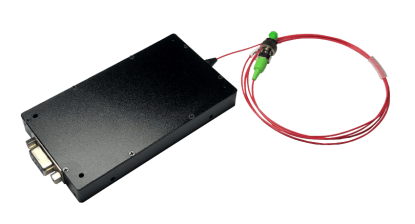
SMART SCI&TECH provides some options of 1550 nm ultra-narrow linewidth single-frequency laser modules to cater to different application requirements:
| Model | Linewidth Specification (Lorentzian FWHM) | Measured Linewidth | Fiber Output Power |
| FL-2 | 15 kHz | 11.6 kHz | 20 mW |
| FL-1 | 3 kHz | 2 kHz | 20 mW |
| FL-0 | 1 kHz | 0.96 kHz | 10 mW |
| FL-2P | 15 kHz | 11.6 kHz | 30–200 mW |
The linewidth is given in terms of the Lorentzian linewidth (FWHM). The corresponding measured linewidths are 11.6 kHz, 2 kHz, 0.96 kHz, and 11.6 kHz, respectively.
The modules are designed for applications including distributed fiber optic sensing (DAS, DVS, and BOTDR), LiDAR, industrial metrology, and optical measurement systems. Customized wavelengths in the C-band range are also provided.
While choosing a laser source for your system, please think of the linewidth, the output power, the frequency stability, and the optical compatibility. Please contact SMART SCI&TECH for discussions about your application requirements.